 by
The NFL often gets called greedy, especially as of late. They’ve filled the regular season schedule with extra games on irregular days — Wednesday before Thursday’s season opener, the day before Thanksgiving, Black Friday — all to make an extra buck selling to streamers. Plus, way too many international games at weird hours of the day.
But… to their credit, the NFL has yet to cash in on the prediction market boom. We’ve seen top leagues like the NHL, MLS, and MLB sign big-money sponsorship deals with the likes of Kalshi and Polymarket. Obviously, as the country’s most popular league, the NFL could demand the highest premium on a similar deal. So it’s their choice not to take the money, not the other way around.
Perhaps why the NFL has been hesitant to eek a deal is because there’s still huge question marks over the legality of these things. Are they pseudo sports betting apps or true financial products, as they argue today?
Welp, they don’t know, but they know who does — the Supreme Court. NFL has asked the highest courts to look into this issue, and their opinions carries a lot of weight. We mean, they have teams in 23 states, including California (where the NFL also has an office). Keep on reading and we’ll tell you what’s going on!
NFL Says These Are Sports Bets, Period
Bombshell incoming: earlier this month, “the shield” filed an amicus brief backing New Jersey’s effort to get its fight with Kalshi in front of the Supreme Court. That doesn’t mean NFL is suing, they’re not. However, it is lending its outisized influence to explain why the justices should hear it.
Let’s backtrack a bit. Back in April, New Jersey lost at the Third Circuit when the court blocked it from enforcing state gambling laws against Kalshi. But the Sixth and Ninth Circuits have sided with states in other cases. The NFL’s brief says those two courts got it right, and not the Third Circuit. Yes, the NFL has taken sides and it’s not with Kalshi and the likes.
The legal argument keeps coming back to “swaps,” a financial instrument covered by the Dodd-Frank Act. These commonly help businesses manage existing risks, like fluctuations in interest rates or currencies. Qualifying as a swap would put a sports contract under the Commodity Futures Trading Commission’s exclusive jurisdiction. That’s the protection these platforms currently have, and want to keep.
The NFL argues sports contracts create risk for someone looking to gamble rather than hedge a risk they already face. And it points to a pretty glaring historical detail: Congress passed Dodd-Frank in 2010 after the Great Recession, while federal restrictions on sports betting were still intact. Are we really supposed to believe lawmakers fixing the banking system also meant to authorize nationwide sports bets…? Probably not, right?
The NFL Has Asked For Protections — And Isn’t Happy With The Response
Why does the league care anyway? It’s extra sponsorship money at the end of the day.
But… the NFL is thinking in second-order effects here, and that’s “integrity of the game.” For instance, the league says it has sent multiple notices urging prediction markets to remove contracts that could be prone to manipulation. These are protections the NFL already has in place with top sports betting apps, and wants prediction markets to follow suit.
According to the brief, the NFL identified four categories of objectionable wagers, yet the CFTC still hasn’t adopted a flat ban on any of them. Kalshi and Polymarket have withdrawn some markets, but continue listing others the league objects to.
Then there’s the league’s prohibited-bettor lists. The NFL says prediction markets haven’t accepted them, leaving out a safeguard intended to counter insider trading. Players, coaches, and officials have info the everyday Joe simply doesn’t, and the league wants safeguards on that.
The cherry on top here is CFTC staffing, or lack thereof. The NFL isn’t sure they have enough staff to do the job. You see, the CFTC had 543 employees as of September 2025 — after cuts eliminated roughly a quarter of its workforce.
In comparison, Pennsylvania and Nevada each employ close to 400 people at their gaming regulators. Those agencies oversee their respective states only — not the whole country like the CFTC is supposed to oversee. Either these states are wildly overstaffed, or the CFTC is understaffed; pick your poison.
The NFL Wants This Settled Before Next Season
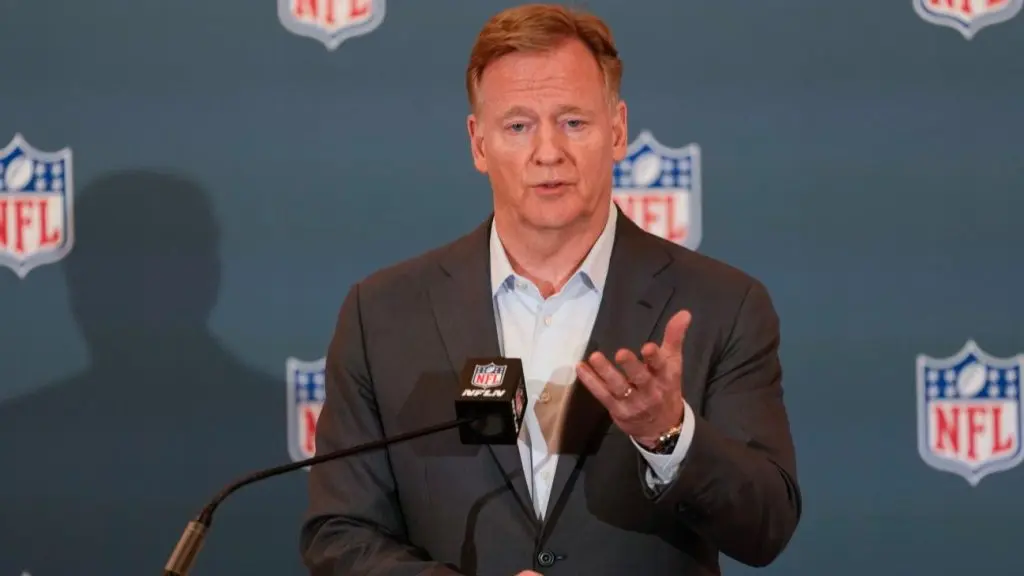
For all that criticism, NFL commissioner Roger Goodell still called prediction markets “potential partners” in his CNBC interview last month. He’s not trying to make enemies out of these platforms, but he wants stronger regulations first.
There’s also an awkward overlap: FanDuel, DraftKings and Fanatics are NFL betting partners, and all three offer prediction markets. Their conventional sportsbooks follow the league’s prohibited-wager guidelines, but their prediction products do not. Try to make sense of that, huh?
To wrap this up, the NFL wants an answer before the 2027 season, citing billions already wagered on its games through prediction markets. A state-friendly ruling would give it the regulatory framework it prefers. A Kalshi win would give them free rein to ink that splashy sponsor deal like every other league has at this point.
