Best Prediction Market Sites: Top Websites in 2026
 by
Chris Wassel
by
Chris Wassel
Prediction market sites let you trade on the outcome of real world events, like elections, economic data, crypto milestones, major sports moments, among other more niche markets. Rather than placing a fixed wager, you buy and sell shares tied to an outcome, and the price moves based on how other traders react to the market. It’s often thought of as a more market-driven alternative to fixed-odds betting.
This guide is for sports bettors who want market-driven pricing, politics and election followers who track forecasts, and crypto or macro users who like trading around news. If you already use sportsbooks or offshore betting sites, this page will help you understand what prediction markets do differently.
We cover how prediction market sites work, what to watch for when choosing one, and which platforms are worth considering right now. You will also find links with specific elements of prediction markets explained in more depth, and individual reviews if you want to dig into one site or topic in more detail. It’s worth noting that these prediction market sites include both web-based prediction websites and mobile-friendly prediction apps, covering everything from politics to crypto markets.
Best Prediction Market Sites
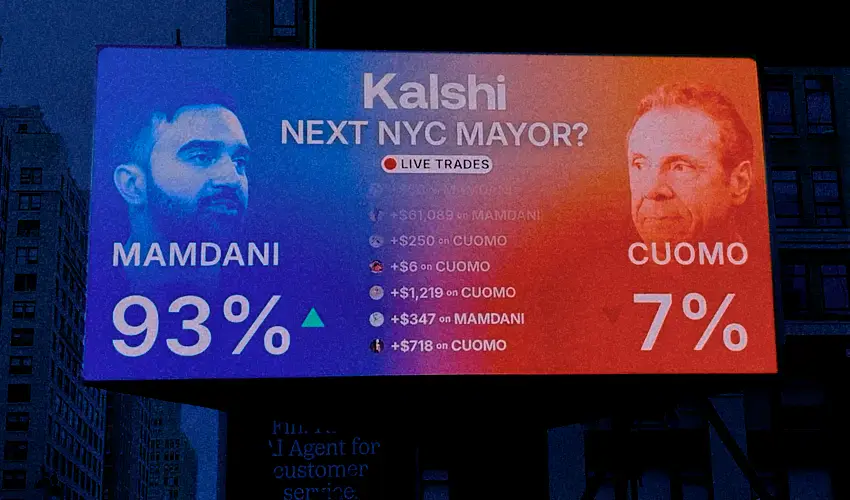
Not all prediction market sites are useful in practice. Some have plenty of buzz but thin liquidity, others look polished but suffer from unclear settlement rules or inactive markets once the headlines fade.
The platforms below are selected based on how usable they actually are, not just name recognition. We focus on liquidity, how clearly contracts are written and resolved, how active markets stay as events unfold, and whether users can realistically enter and exit positions without friction. This is not a ranking by popularity alone, but by how well each site works for real users trading real events.
Top Prediction Markets and Platforms Right Now
Below are the prediction market sites most readers ask us about. We focus on what each platform actually does well, the types of markets you can trade, and who they make the most sense for. None of these are perfect for every user, which is why context matters.
Polymarket
- Markets covered: Politics, crypto, macro events, culture
- Key strengths: High liquidity on major markets, fast price movement, simple trading flow
- Best for: Active traders reacting to news in real time
- Not ideal if: You need guaranteed access from all regions or prefer long-term holds over trading
Polymarket is most useful for users who treat prediction markets like a trading screen rather than a one-time bet. Many traders enter and exit positions multiple times as polls, headlines, or on-chain data change, instead of holding until settlement. For crypto traders, Polymarket is often mentioned as one of the more accurate crypto prediction sites, although no prediction website is consistently perfect.
Liquidity is strongest around high-profile events such as US elections and major crypto milestones, which keeps spreads relatively tight. The main drawback is access. Availability depends on location, and users outside supported regions may be blocked or limited, which makes it less reliable as a universal option.
Kalshi

- Markets covered: Politics, inflation, interest rates, economic indicators
- Key strengths: Regulated exchange structure, clearly defined contracts, transparent settlement rules
- Best for: Users who prioritize regulatory clarity and contract certainty
- Not ideal if: You want constant market action or a wide range of niche topics
Kalshi operates more like a financial exchange than a traditional betting site. Each contract has strict, clearly written settlement criteria, which reduces ambiguity around how and when markets resolve. This makes it appealing to users who are cautious about legal gray areas and want predictable outcomes.
The trade-off is activity. Outside of major macro events, some markets can feel slow, and price movement is often less reactive than on more speculative platforms. For users who value structure and compliance over fast trading opportunities, Kalshi fills a specific role rather than serving as an all-purpose prediction market.
PredictIt

- Markets covered: US politics and elections
- Key strengths: Simple market structure, low learning curve, long operating history
- Best for: Election focused users and first-time prediction market participants
- Not ideal if: You want to trade larger positions or move in and out frequently
PredictIt is often where people get their first exposure to prediction markets. The markets are straightforward, focused almost entirely on US political outcomes, and easy to understand even if you have never traded contracts before.
Its limitations become obvious as users gain experience. Position caps and fees make active trading less efficient, and liquidity can dry up outside of major election cycles. PredictIt works best as a lightweight forecasting tool rather than a platform for aggressive trading or long-term strategies.
Manifold Markets

- Markets covered: Politics, tech, internet culture, niche topics
- Key strengths: Open market creation, community driven forecasting, low barriers to entry
- Best for: Forecasting enthusiasts and users interested in niche or experimental questions
- Not ideal if: You are primarily focused on liquidity or consistent profit opportunities
Manifold Markets operates closer to a forecasting community than a traditional betting or trading platform. Users can create markets on almost any topic, which leads to a wide range of questions that would never appear on more regulated sites.
That flexibility comes with trade-offs. Liquidity varies widely from market to market, and many users treat positions as signals rather than investments. Manifold works best for users interested in prediction accuracy, idea testing, and long tail topics, rather than those looking for tight spreads or reliable exits.
This list of prediction markets focuses on usability, liquidity, and accuracy rather than hype. Some users look for the best prediction app, while others prefer browser-based prediction sites, especially for crypto and political markets.
What Is a Prediction Market Site?
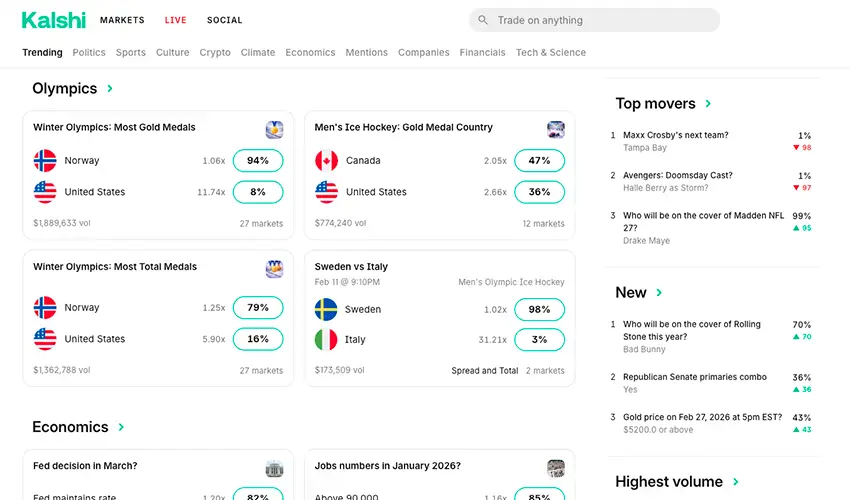
A prediction market site is a platform where users trade shares tied to real world outcomes instead of betting against a bookmaker. You are not locking in odds. You are taking a position in a market where prices move as information changes.
Each outcome is priced between 0 and 100 cents, or 0 and 1 dollar. That price represents what the market currently believes the chance of that outcome is. A contract trading at 65 cents implies the market sees roughly a 65 percent probability, and that estimate updates continuously as users buy and sell.
What matters in practice is not the final result, but how prices move before settlement. Users can enter early, exit when sentiment shifts, or hold until resolution, depending on their view. This flexibility is why many people use prediction markets as both forecasting tools and trading products, rather than treating them like traditional gambling sites.
How Prediction Market Sites Work
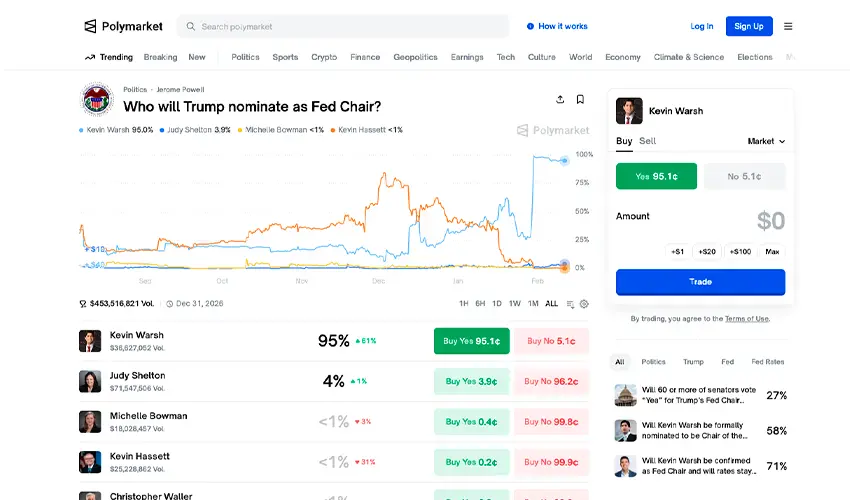
Prediction market sites all follow the same basic flow, even though the markets themselves can look very different.
- A market is created around a specific question. For example, “Will Candidate A win the election?” or “Will inflation reach X% by DATE?”
- The market lists outcomes as tradable shares. Most markets use YES and NO shares for the same question.
- Traders buy or sell shares as the prices change. If new info makes YES more likely, YES shares usually rise in price. If the outlook shifts, prices can fall and traders can sell or take the other side.
- You can exit before the event ends. In most markets, you do not have to wait for settlement. You can sell your position at the current market price.
- When the event resolves, the market settles. The winning outcome pays out at full value, the losing outcome settles at zero. Profit comes from buying below the final settlement price or selling above it.
For a deeper breakdown of pricing mechanics, probabilities, and contract structure, see our full guide on how prediction markets work.
Are Prediction Market Sites Legal?
Whether prediction market sites are legal depends on how the platform is structured and where you are located. Unlike sportsbooks, prediction markets sit somewhere between gambling and financial contracts, which is why rules and enforcement are inconsistent.
In the United States, some platforms operate under regulatory oversight, while others restrict or block US users entirely. In practice, this often shows up as account limits, mandatory identity verification, capped position sizes, or full geo blocks depending on the site. Outside the US, access rules vary by country and can change without much notice.
Because of this, availability is not just a legal question but a usability one. Even well known platforms may limit who can trade, how much you can stake, or which markets you can access based on location and compliance requirements.
This section is for general information only and is not legal advice. Rules change, and users should always check a platform’s terms and access rules directly to confirm how local laws apply before depositing funds.
How to Choose a Prediction Market Site
Not every feature matters equally when it comes to prediction markets. Some factors will directly affect whether you can trade efficiently, while others are secondary.
- Liquidity and volume come first: If a market has low volume, everything else matters less. Thin liquidity leads to wide price swings, poor entry and exit prices, and difficulty closing positions before settlement. Active markets with steady volume are far more usable in practice.
- Markets offered: Some platforms focus heavily on politics, while others lean toward economics, crypto, or niche topics. A site is only useful if it consistently offers markets you want to trade, not just during headline events.
- Fees and spreads: Prediction markets charge trading fees or build costs into pricing. These costs compound quickly if you trade often, so even small differences in fees can have a real impact on long term results.
- Geographic access and verification: Access rules vary widely. Some platforms restrict users by country, while others require identity verification before you can trade or withdraw. Confirming eligibility upfront avoids funding an account you cannot fully use.
- User experience and clarity: Clear contract wording, intuitive market layouts, and transparent settlement rules matter more here than flashy design. Confusing interfaces or vague resolution criteria are common warning signs, especially for new users. For deeper breakdowns of these factors, we link to full platform reviews above where we cover fees, limits, usability, and availability in more detail.
Prediction Market Sites vs Sports Betting
Prediction market sites and traditional sportsbooks approach pricing, risk, and user control in very different ways, even when they cover similar events.
On prediction markets, prices are set by users trading with each other. The price reflects collective belief and updates continuously as new information comes in, such as polls, injuries, economic data, or breaking news. This makes prediction markets useful for reacting early and adjusting positions as sentiment changes.
Sportsbooks set fixed odds and build in a vig, which is the bookmaker’s margin. You place a bet at those odds and typically hold it until settlement, unless a cash-out option is offered. This structure is simpler and often better suited for straightforward wagers, especially on sports.
In practice, many users combine both. A sports bettor might use prediction markets early in the week to react to news or speculation, then place a traditional bet once sportsbook lines settle. Prediction markets also tend to shine in politics and macro events, while sportsbooks remain the better choice for deep sports coverage and prop betting.
Fees and risk differ as well. Sportsbook vig is embedded in the odds, while prediction markets charge trading fees or spreads that can add up if you trade frequently. Regulation and access also vary, especially when comparing regulated exchanges, offshore sportsbooks, and prediction markets operating in gray areas.
If you want a full breakdown of pricing models, risk, and use cases, we go deeper in our detailed guide comparing prediction markets vs sports betting.
Who Are Prediction Markets Best For?
Prediction markets are not a universal replacement for sportsbooks, but they can be a strong fit for certain types of users depending on goals and mindset.
Who Prediction Markets Are Not Ideal For
Prediction markets are not always the best choice if your main goal is simple, entertainment focused betting. Users who prefer parlay building, same game bets, deep player props, or fast deposits and withdrawals usually find traditional sportsbooks more convenient.
They can also be frustrating for users who dislike fees, thin liquidity, or uncertainty around access and verification. If you want guaranteed availability, predictable limits, and a straightforward betting flow, sportsbooks often provide a smoother experience. There is no single best prediction site in the world, since accuracy and usefulness depend on liquidity, market design, and how actively users trade.
For many users, prediction markets work best as a complement to sports betting rather than a replacement, filling gaps where sportsbooks do not offer markets or react slowly to new information.
Prediction Market FAQs
Find answers to common questions bettors like you have when choosing a prediction market site.
Some prediction market sites operate under regulatory oversight, while others restrict or block US users. In practice, legality affects access, position limits, and verification requirements more than anything else, which is why availability can change over time.
That depends on how the platform is structured. Some are treated more like event-based financial contracts, while others resemble gambling products. This classification difference is a big reason prediction markets often fall into legal gray areas.
Prediction markets can react faster than polls because prices update in real time as new information comes in. However, low liquidity, strong bias, or coordinated trading can distort prices, especially in smaller markets.
Prediction market prices are set by users trading with each other, while sportsbook odds are set by the bookmaker and include a vig. A 60 cent contract implies roughly a 60 percent probability, while sportsbook odds are adjusted to protect the house margin.
Some users do, but it is difficult. Profits depend on timing, information, liquidity, and fees, and many markets are efficient during high-profile events. Most users find prediction markets more reliable as forecasting tools than as consistent income sources.

Chris Wassel is a veteran sports writer, editor, and betting analyst with nearly three decades of experience covering sports, fantasy sports, and wagering. A longtime member of the Fantasy Sports Writers Association (FSWA), the Fantasy Sports & Gaming Association (FSGA), and several sports betting communities, Chris has built a reputation for combining d...
Read More About the Author