Polymarket Review | Markets, Fees, and Legality
 by
by
SUMMARY
- What Is Polymarket?
- How Polymarket Betting Works
- Polymarket Odds Explained
- Markets Covered on Polymarket: Politics, Trump, and Major Events
- Polymarket Fees
- Polymarket Crypto: Deposits and Withdrawals
- Polymarket Promo Code
- Is Polymarket Legal?
- Geography, KYC, and Accessibility
- Safety, Track Record, and Reputation
- Customer Support
- User Experience and Platform Design
- Who Is Polymarket Best For?
- Alternatives to Polymarket
- Final Verdict on Polymarket
- How We Evaluated Polymarket
Quick take: This Polymarket review covers how this crypto prediction market works, what you can bet on including Polymarket election odds, how Polymarket odds are priced, typical Polymarket fees to expect, and what to know when people ask, “is Polymarket legal?”
Rating: 4.2/5
Best for: Traders who want event markets and election contracts, including Polymarket presidential election markets and presidential betting odds Polymarket users track daily.
Not ideal for: Bettors who prefer traditional spreads, totals, parlays, and sportsbook-style bonuses.
Pros
- Market-priced contracts that reflect implied probability instead of fixed sportsbook odds
- Strong coverage of politics, including Trump markets and live Polymarket election odds
- Ability to trade in and out of positions before an event settles
Cons
- Crypto-first setup, so Polymarket crypto deposits and withdrawals may not suit everyone
- Liquidity varies by market, which can impact entry and exit prices
- Access depends on jurisdiction, so the question “is Polymarket legal” has different answers depending on location
Polymarket is a crypto-based prediction market where users trade on the outcome of real-world events, most notably US elections. During major news cycles, Polymarket presidential election contracts and Trump markets often move faster than traditional sportsbook odds.
This Polymarket review explains exactly how Polymarket betting works, how Polymarket odds translate into implied probability, what Polymarket fees you actually pay, whether a Polymarket promo code exists, and what you need to know before deciding if Polymarket is legal in your jurisdiction.
What Is Polymarket?
If you are wondering what Polymarket is, we can describe it as a crypto-based prediction market where users trade on the outcome of real-world events. Instead of placing a fixed-odds wager like you would at a traditional sportsbook, you buy and sell shares tied to a specific outcome.
Each contract usually trades between $0.00 and $1.00. The price represents the market’s implied probability. For example, if a “Yes” share is trading at $0.64, the market is implying a 64 percent chance that the event will happen. If the event resolves as “Yes,” the contract settles at $1.00. If it resolves as “No,” it settles at $0.00.
This structure makes Polymarket betting feel closer to trading than a typical moneyline bet. Prices move based on supply and demand rather than a bookmaker’s internal model. There is no built-in vig like you would see at a sportsbook. Instead, the cost usually comes from market spreads and platform fees.
Background and History of Polymarket
Polymarket launched in 2020 and was founded by Shayne Coplan. The platform was built to let users trade on real-world predictions using blockchain technology. Markets have covered topics such as elections, economic indicators, global conflicts, and major sporting events.
The platform runs on the Polygon blockchain and typically uses the USDC stablecoin for trading. This setup allows users to buy and sell prediction shares quickly while keeping transaction fees relatively low compared with earlier Ethereum-only markets.
Polymarket has also faced regulatory scrutiny. In early 2022, the platform reached a settlement with the US Commodity Futures Trading Commission (CFTC) over operating an unregistered event-based binary options market. As part of the agreement, Polymarket paid a civil penalty and restricted access for US users.
Despite these regulatory challenges, the platform has continued to operate internationally and has grown in visibility during major global events. Many traders now treat it as a real-time indicator of public sentiment because prices constantly adjust as new information enters the market.
How Polymarket Betting Works
Polymarket betting starts with a defined question. For example: “Will Candidate X win the 2028 presidential election?” That market will have two primary sides, Yes and No, each with its own price.
When you buy a Yes share at $0.40, you are effectively risking $0.40 to win $0.60 if the outcome happens. If you buy a No share at $0.60, you are risking $0.60 to win $0.40 if the outcome does not happen. The math is straightforward because the maximum payout per share is always $1.00.
One important difference compared to a sportsbook is that you do not have to hold your position until the event settles. If you buy Yes at $0.40 and the price later moves to $0.55, you can sell and lock in profit before the final result. That trading flexibility is one of the main reasons experienced users prefer Polymarket crypto markets over fixed-odds betting.
Polymarket Odds Explained
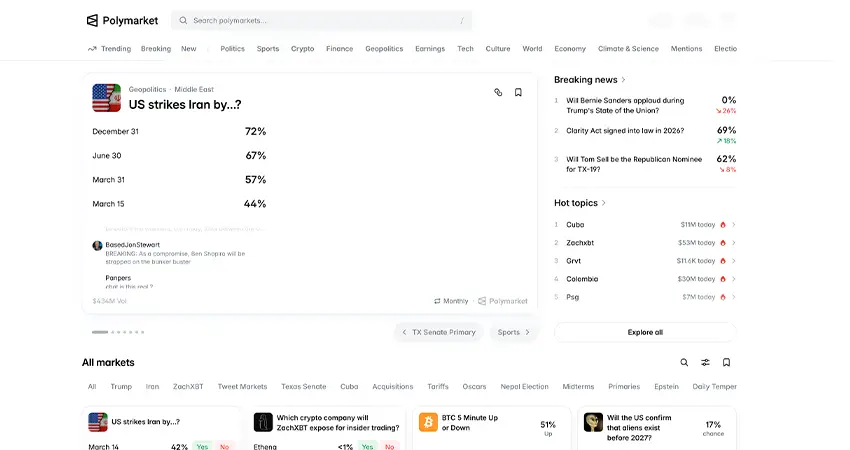
Polymarket odds are expressed as prices rather than American odds like -110 or +200. To convert Polymarket odds into probability, you simply read the price as a percentage.
- $0.75 price = 75 percent implied probability
- $0.25 price = 25 percent implied probability
Because these markets are driven by traders, prices can move quickly in response to breaking news. During election cycles, Polymarket election contracts often shift within minutes of debates, polling releases, or legal developments.
This is why many users monitor presidential betting odds Polymarket lists alongside traditional sportsbook lines. In some cases, the market reacts faster than bookmakers adjusting their numbers.
Markets Covered on Polymarket: Politics, Trump, and Major Events

Polymarket markets focus heavily on politics and major global events, though the platform also includes contracts tied to crypto, economics, and technology. Some sports markets appear occasionally, but they are far less developed than what you would see at a traditional sportsbook.
Political Markets
Political markets are the core of Polymarket’s activity. During US election cycles, trading volume increases significantly as users buy and sell shares based on how they expect political events to unfold.
Many of these contracts are widely followed because their prices move in real time as new information enters the market. Media outlets often reference Polymarket election odds as a snapshot of current sentiment.
Common political contracts include:
- Winner of the US presidential election
- Which party will control the Senate or House
- Individual candidate outcomes, including Polymarket Trump markets
- Policy decisions or Supreme Court rulings
For example, a contract might ask whether Donald Trump will win a specific primary, secure the party nomination, or win the general election. If a “Yes” share trades at $0.62, the market is implying roughly a 62 percent probability for that outcome.
Crypto and Economic Markets
Polymarket also hosts markets tied to financial and macroeconomic developments. These markets tend to attract traders who follow digital assets or major economic indicators.
Typical examples include:
- Cryptocurrency price milestones such as Bitcoin reaching a certain level
- Inflation reports and economic data releases
- Federal Reserve policy decisions
- Corporate announcements or major tech launches
Because these markets resolve based on verifiable public data, they often appeal to users who prefer trading on measurable outcomes rather than speculation about future events.
Sports Markets
Sports markets occasionally appear on Polymarket, but they are not the platform’s primary focus. Compared with a sportsbook, the selection is much narrower.
Traditional sportsbooks usually offer moneyline bets, spreads, totals, and parlays across dozens of leagues. On Polymarket, sports contracts tend to focus on a single question such as a championship winner or a major milestone.
For bettors interested in weekly NFL betting, NBA props, or detailed odds boards, the platform will feel limited compared with a dedicated sportsbook.
Polymarket Fees
Polymarket fees work differently from a traditional sportsbook vig. Instead of embedding a margin in fixed odds, most markets on the platform allow trading without a direct platform fee.
When using Polymarket betting, your total cost usually comes from:
- The bid-ask spread between buy and sell prices
- Blockchain network fees when depositing or withdrawing Polymarket crypto
- Occasional trading fees in certain specialized or lower-liquidity markets
In high-volume markets such as presidential election contracts, spreads are usually tighter. In smaller markets, spreads can widen, increasing your effective cost.
Polymarket runs on the Polygon blockchain and uses USDC for transactions, so network fees for deposits and withdrawals are typically small compared with older Ethereum-based platforms.
Trading Limits
Polymarket does not use traditional sportsbook-style betting limits. Instead, your maximum position depends on market liquidity and the depth of the order book.
Large markets with heavy trading activity allow larger positions because there are more buyers and sellers. Smaller markets may limit how much you can trade without significantly moving the price.
Always review the order book before entering larger positions. Liquidity matters more on Polymarket than on traditional fixed-odds sportsbooks.
Polymarket Crypto: Deposits and Withdrawals
Polymarket operates as a crypto-native platform, which means all deposits and withdrawals happen through cryptocurrency rather than credit cards or bank transfers. The platform primarily uses the USDC stablecoin and runs on the Polygon blockchain.
To fund an account, users typically connect a crypto wallet such as MetaMask or another compatible wallet. After connecting, USDC can be transferred to the platform from the wallet balance. Once the transaction is confirmed on the Polygon network, the funds become available for trading.
Withdrawals work in the opposite direction. Users request a withdrawal and the USDC is sent back to their connected wallet. Processing time usually depends on blockchain confirmation speeds rather than an internal cashier review process.
Because the system relies on blockchain transactions, users must manage their own wallets and private keys. Network fees on Polygon are generally low, but basic familiarity with wallets, addresses, and crypto security is necessary before using Polymarket.
Polymarket Promo Code
Many users search for a Polymarket promo code expecting a traditional deposit bonus. Polymarket does not consistently offer large match bonuses like offshore sportsbooks.
Instead, promotions usually focus on trading incentives or temporary fee reductions tied to major events.
If you are specifically looking for a deposit match bonus, a traditional sportsbook will offer more aggressive welcome promotions than Polymarket betting platforms.
Is Polymarket Legal?
Whether Polymarket is legal depends on your location. Prediction markets can fall under different rules than traditional sportsbooks, and availability is shaped by platform policy and local regulations.
Polymarket also operates through separate legal entities. The international Polymarket platform restricts access in certain jurisdictions, including the United States, while Polymarket US is presented as a separate product with its own regulatory status and rollout process.
For the most up-to-date availability, check the platform’s restricted locations list and terms before depositing or trading.
Geography, KYC, and Accessibility
Where you are located determines whether you can use Polymarket. The international Polymarket platform is restricted in certain jurisdictions (including the United States), and the list of blocked or limited locations can change as regulations evolve.
KYC is not always required upfront, but identity verification can be triggered by higher trading volumes, large withdrawals, or compliance reviews. When required, users typically submit government-issued ID and confirm their country of residence.
To trade, you’ll generally need a Web3 wallet and USDC on Polygon. You can fund via a crypto transfer from your wallet, and in some regions you may also be able to purchase USDC through third-party on-ramp partners (availability and fees vary by method and location).
Safety, Track Record, and Reputation
Polymarket has built a reputation as one of the most visible crypto-based prediction markets, though its history includes both rapid growth and regulatory scrutiny.
From a security standpoint, the platform uses blockchain-based settlement on the Polygon network. Trades and balances are recorded on-chain, which reduces reliance on a centralized betting ledger. Users also keep control of funds through connected crypto wallets rather than holding balances inside a custodial sportsbook account.
However, Polymarket has faced regulatory challenges. In 2022, the platform reached a settlement with the US Commodity Futures Trading Commission (CFTC) over operating an unregistered event-based derivatives market. As part of the agreement, Polymarket paid a civil penalty and restricted access for US residents.
Despite this action, the platform continues to operate internationally and remains widely referenced during major political and global events. Like most crypto-based platforms, it still carries risks, including liquidity variation between markets and the need for users to manage their own wallets and private keys.
Customer Support
Polymarket provides customer support primarily through online channels rather than a traditional sportsbook help desk.
Users can usually contact support through:
- The official help center and documentation
- Email-based support requests
- Community channels such as Discord
The help center includes guides on trading, wallet connections, deposits, and account restrictions. Many common issues such as failed transactions or wallet connection problems are addressed in these resources.
Response times can vary depending on request volume, but most inquiries are handled through ticket-based email support rather than live chat. Because the platform relies heavily on crypto wallets and blockchain transactions, support typically focuses on platform issues rather than recovering lost funds or reversing trades.
User Experience and Platform Design
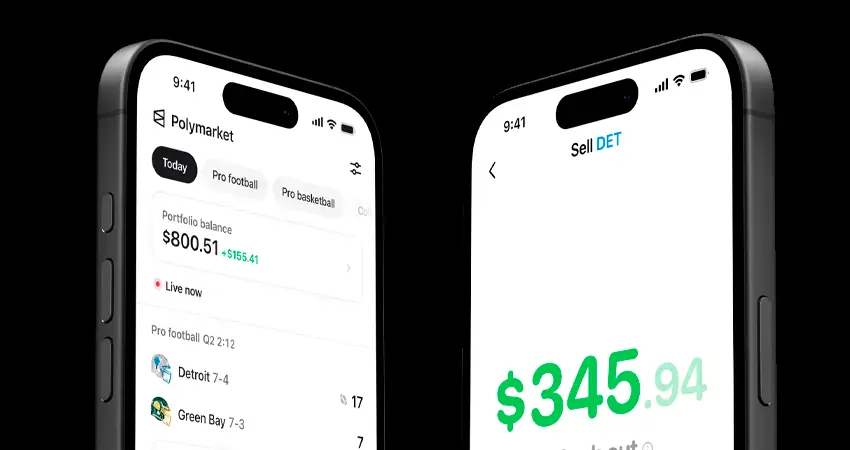
Polymarket has a clean, data-focused interface. Instead of sportsbook-style banners and boosted odds, you will see price charts, order books, and volume indicators. The layout is designed for active trading rather than casual one-click betting.
For users comfortable reading implied probability, Polymarket odds are easy to understand. If you are used to American odds like -110, there may be a short adjustment period. Once you understand that $0.60 equals a 60 percent implied chance, the structure becomes intuitive.
In our testing, navigation between markets was straightforward, and price updates were quick during active news cycles. However, thin markets can feel slow, and large trades may move the price more than expected.
Mobile Access
Polymarket does not currently operate a fully featured native mobile app for iOS or Android in most regions. Instead, users typically access the platform through a mobile browser.
The mobile web version mirrors most of the desktop functionality, including market charts, order books, and trade execution. Wallet connections such as MetaMask or other Web3-compatible wallets can still be used on mobile devices.
While the interface adapts well to smaller screens, the experience still feels closer to a trading dashboard than a simplified sportsbook app. Users who prefer quick mobile betting interfaces may find the layout less streamlined than traditional sportsbook mobile apps.
Who Is Polymarket Best For?
Polymarket is best for users who follow political and macro events closely and prefer trading probability-based contracts instead of placing fixed-odds bets.
It suits crypto-native users comfortable with wallets and blockchain transactions. It is less suitable for bettors who primarily want spreads, totals, and parlays.
Alternatives to Polymarket
Even if Polymarket is one of the most recognizable crypto prediction markets, it is not the only option. Depending on your location and what you want to trade, you may prefer a different structure.
Some platforms focus more heavily on regulated event contracts. Others lean further into crypto-native experimentation with broader market types. The biggest differences usually come down to:
- Regulatory framework and geographic access
- Fee structure and liquidity
- Types of markets offered, especially outside politics
If you want a broader comparison of platforms, you can review our guide to the best prediction market sites, where we compare features, fees, and market depth side by side. You can also see direct head-to-head comparisons in Kalshi vs Polymarket and Polymarket vs PredictIt.
Final Verdict on Polymarket
This Polymarket review shows that the platform fills a specific niche. If you follow campaign cycles closely, Polymarket Trump markets and similar contracts can provide constant price movement and trading opportunities.
Polymarket betting is not built around traditional sportsbook mechanics. There is no standard vig, no fixed spreads, and no long list of player props. Instead, you trade probability-based contracts in a crypto environment. That setup can be efficient and transparent, but it requires comfort with wallets, network fees, and variable liquidity.
Polymarket fees are generally tied to trading activity and blockchain costs rather than hidden inside odds. However, thin markets can increase your effective cost through wider spreads. Understanding liquidity is just as important as understanding the headline price.
When it comes to “is Polymarket legal,” there is no universal answer. Access depends on jurisdiction, platform policy, and current regulatory interpretation. Always verify the latest rules before using the platform.
If your goal is to trade on news, politics, and macro events using Polymarket crypto markets, this platform can make sense. If you want traditional sports betting with spreads, totals, and large deposit bonuses, a standard sportsbook will likely be a better fit.
How We Evaluated Polymarket
For this Polymarket review, we approached the platform the same way we would approach a new sportsbook or exchange-style betting product. We created an account, reviewed the onboarding flow, explored active markets, and analyzed pricing behavior during live news cycles.
We focused on five core areas:
- Market depth and liquidity in major contracts, especially Polymarket presidential election and Polymarket Trump markets
- How Polymarket odds move during breaking news and whether pricing reacts quickly
- Transparency and structure of Polymarket fees
- Ease of use for new users entering the Polymarket crypto ecosystem
- Clarity around access restrictions and the “is Polymarket legal” question
We also compared Polymarket betting mechanics to traditional fixed-odds sportsbooks. That included evaluating how implied probability is displayed, how spreads affect effective cost, and how easy it is to enter and exit a position compared to placing and cashing out a moneyline wager.
Polymarket FAQs
Find answers to common questions bettors like you have when choosing a prediction market site.
Polymarket is a crypto-based prediction market where users trade shares in the outcome of real-world events. Prices range from $0.00 to $1.00 and reflect implied probability rather than traditional American odds.
Polymarket does not consistently offer large deposit match bonuses like traditional sportsbooks. Promotions typically focus on trading incentives or temporary fee reductions. Always check the platform directly to see if a Polymarket promo code is active.
Polymarket odds are displayed as prices between 0 and 1. A price of $0.70 implies a 70 percent chance of the outcome occurring. If the event resolves in your favor, each winning share pays out $1.00.
Legality depends on regulatory rules and platform policy. Access may be restricted based on your location. You should confirm the current terms and applicable laws before using Polymarket betting services.
Yes. One key feature of Polymarket betting is that you can sell your shares before the event resolves, allowing you to lock in profit or limit losses based on updated Polymarket odds.

Luke Chadwik is an experienced writer with a focus on European football, but has always had a keen passion for sport and follows all major leagues across the world. When Luke isn't writing about sports, he's focused on his passion for road biking or spending time with his twin daughters.