 by
by
Here we go again — another state has taken aim at prediction markets. This time, it’s Wisconsin, and they’re suing all the top prediction platforms like Kalshi, Polymarket, and even Robinhood and Coinbase, who both offer “event contracts.”
This now makes it more than a dozen different U.S. states that’ve gone to the courts with lawsuits against the top prediction sites. And at this rate, the number is only going to continue to swell.
But with the case of Wisconsin, the federal government wasted no time in fighting back, launching its own lawsuit against the state. Yes, really. Keep on reading, and we’ll tell you all about what happened!
Why Wisconsin Wants Prediction Markets Out
The Wisconsin Department of Justice came out with its lawsuit on April 22. Taking charge is Wisconsin Attorney General Josh Kaul. Here’s his exact words when he announced the lawsuit against the prediction platforms:
“Sports betting and other forms of commercial gambling have long been illegal in the state of Wisconsin. No company is above this law, no matter how creatively those companies try to disguise the activity that they’re engaged in,” Kaul said.
Like every other state, Kaul and Wisconsin aren’t buying the whole “we’re event contracts, not betting” line from the platforms. That argument, plus the fact that events contracts are regulated by the federal government — not states — is why the likes of Kalshi and Polymarket exist across the country.
But here again, we’re seeing Wisconsin essentially argue for its state rights. Sports betting in Wisconsin is legal, but only through Native-American tribes. There are no commercial sports betting apps allowed. As far as they can tell, prediction markets fit into that latter category.
Like we said, other states have made this same argument, but so far, none of them have won in court. New Jersey is the most notable example. Here is the state that unleashed legal sports betting when it won a Supreme Court case in 2018. When trying to prohibit prediction markets recently, a federal appeals court ruled 2-1 in favor of prediction platforms over New Jersey.
The court maintained that the federal government and the CFTC govern prediction markets — not states. Of course, this was just one court ruling. A different court might say something different, which will only muddle the situation more nationally. Heck, we’re already there with the state of Wisconsin, which we’ll get into next.
The Feds Sue Wisconsin Right Back
For a while, the federal government was letting these lawsuits (partly aimed at their governance) slide. But that is now more.
A week after Wisconsin sued, they sued right back. We’re talking about the CFTC — Commodity Futures Trading Commission — here, who is leading the lawsuit vengeance. Here is exactly what they said:
“States cannot circumvent the clear directive of Congress,” CFTC Chair Michael Selig said in a press release. “Our message to Wisconsin is the same as to New York, Arizona, and others: if you interfere with the operation of federal law in regulating financial markets, we will sue you.”
Adding fuel to the fire was Coinbase’s vice president of legal Ryan VanGrack. As we said, they caught a lawsuit from Wisconsin, too, as the crypto trading platform also offers event contracts now. Writing on X, VanGrack said the following:
“The CFTC’s lawsuits, including its recent actions in New York and Wisconsin, represent a definitive line in the sand. By moving to block state encroachment, the Commission has sent an unmistakable signal: the era of jurisdictional ambiguity is over. Federal law is not a suggestion—it is the exclusive authority governing these markets.”
For what it’s worth, the CFTC is in the process of setting up rules around prediction markets. We’re not sure what those will be, but they seem pretty content in keeping this a federal governance, not a state-by-state thing. If that’s the case, then Wisconsin’s lawsuit won’t go very far.
Timing of Lawsuit Is Not Coincidental
What’s funny about all this is that Wisconsin decided to act in April — the same month when it finally chose to expand its sports betting industry. Coincidence? Probably not.
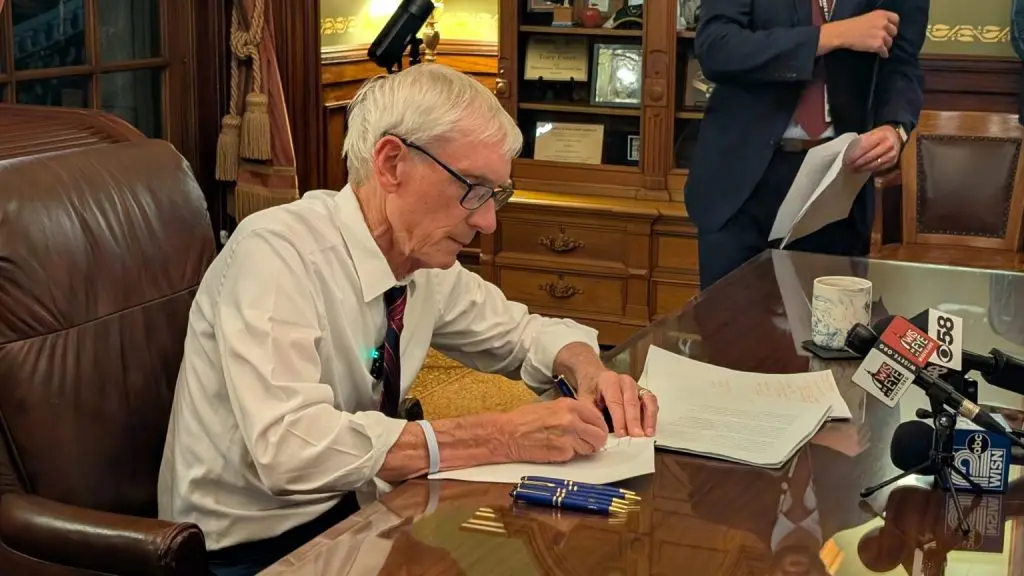
In case you missed it, a bill was recently signed into law by Wisconsin Governor Tony Evers. It will allow the state’s 11 tribes to offer statewide online sports betting. Previously, betting was allowed online in person at casinos.
This bill flips that on its head. Using a “hub and spoke” model like Florida, mobile betting will be allowed anywhere and everywhere in Wisconsin. That’s because betting servers will be hosted on tribal land. Using that loophole, technically, all betting will go through tribal land — even if you’re sitting on your couch.
So now there are clear incentives for Wisconsin. If you’re about to expand the scope of in-state sports betting, why would you let Kalshi, Polymarket, Robinhood, Coinbase, and the like scoop up sports action in the meantime? That would take a bite out of its own industry and potential tax dollars.
That’s the real threat here. It’s not just about moral opposition to gambling. Wisconsin is already okay with sports betting — under the right structure. What it doesn’t want is a bunch of outside platforms sneaking into the state before the tribes get their own mobile market off the ground.
 Online betting sites