 by
We write ad nauseam here about this state suing a prediction market. Or heck, tribes doing the same.
Rarely do we ever talk about a prediction market beginning the lawsuit. Welp, that’s what happened recently — Underdog is going on the offensive.
Underdog has long been known for offering fantasy sports games. However, it too has gotten into the prediction market craze with a product just for it. And as the lawsuit hints, they want it to stay that way and NOT get banned in states like New Mexico, where traditional sports betting apps are disallowed.
Instead of waiting for states to attack them, Underdog is suing to stay up. Keep reading, and we’ll tell you all about how they’re suing five different states for their right to offer sports-based prediction markets!
Why Underdog Sued Five States At Once
This happened back in September but flew under the radar. But here’s the skinny: Underdog filed five separate lawsuits in federal court. The states that got hit include:
- Massachusetts
- New Mexico
- Ohio
- Washington
- Wisconsin
But… don’t think it’s because these states banned their prediction market. No, no, but Underdog feared they would…. eventually. That’s because these five states were already in court over sports prediction markets.
These cases were with competitors, mind you. In Ohio, regulators were trying to fine Kalshi $5 million for offering sports event contracts. Over in Massachusetts, the attorney general had already gotten a judge to order Kalshi to stop offering those contracts. As for New Mexico and Washington, both were already facing similar lawsuits from another sports prediction market, Novig (the one with those Sidney Sweeney ads).
Then there’s Wisconsin, where the attorney general went after five operators — Kalshi, Coinbase, Robinhood, Polymarket, and Crypto com’s OG exchange. The last one is important because Underdog’s prediction market is in partnership with Crypto com.
Underdog’s lawsuit hinges on prediction markets being federally legal. It’s the same argument their competitors are using. Sports contracts might look like sports bets, but technically, they’re financial products, per federal laws. The lawsuits want the states to let Underdog freely offer sports contracts.
“We’re licensed by the federal government to offer markets, and we take our responsibilities as a federal exchange seriously and strictly comply with all regulations,” said Stacie Stern, Underdog senior vice president of government affairs and partnerships. “Do we believe we are right on the law? Yes. Do we accept that these state gaming boards believe they are right on the law? Yes.”
And if you’re wondering why a company you probably know for fantasy football cares enough about prediction markets to take on five states, look at what it did three days before filing those lawsuits. It told customers in seven states they’d soon lose access to new fantasy drafts. We’ll explain in the next section.
Underdog Picked Prediction Markets Over Fantasy Drafts
Like we said earlier on, most people think of Underdog as a fantasy sports spot. But… it’s increasingly trying to be more of a prediction market platform than anything else.
Some of that is out of opportunity. Recent valuations have Kalshi — the leader in the peace — at $40 billion. Maybe that’s overvalued (it most likely is), but it’s sure a hell more than they could fetch by offering DFS games.
But there’s another reason for Underdog’s prediction market pivot: necessity.
It has either been stripped or willfully given up its sportsbook licenses — yes, it offered legal sports betting too — in many states. Toward the end of last year, Arizona threatened to revoke the sportsbook license after Underdog went live with its prediction markets.
Arizona was the first to play that game with Underdog, but certainly not the last. Per its CEO, the site had to stop offering its DFS Drafts game in seven states — Maryland, Massachusetts, Michigan, Mississippi, New Jersey, Ohio, and Pennsylvania.
How Much Is Underdog Betting On Predictions?
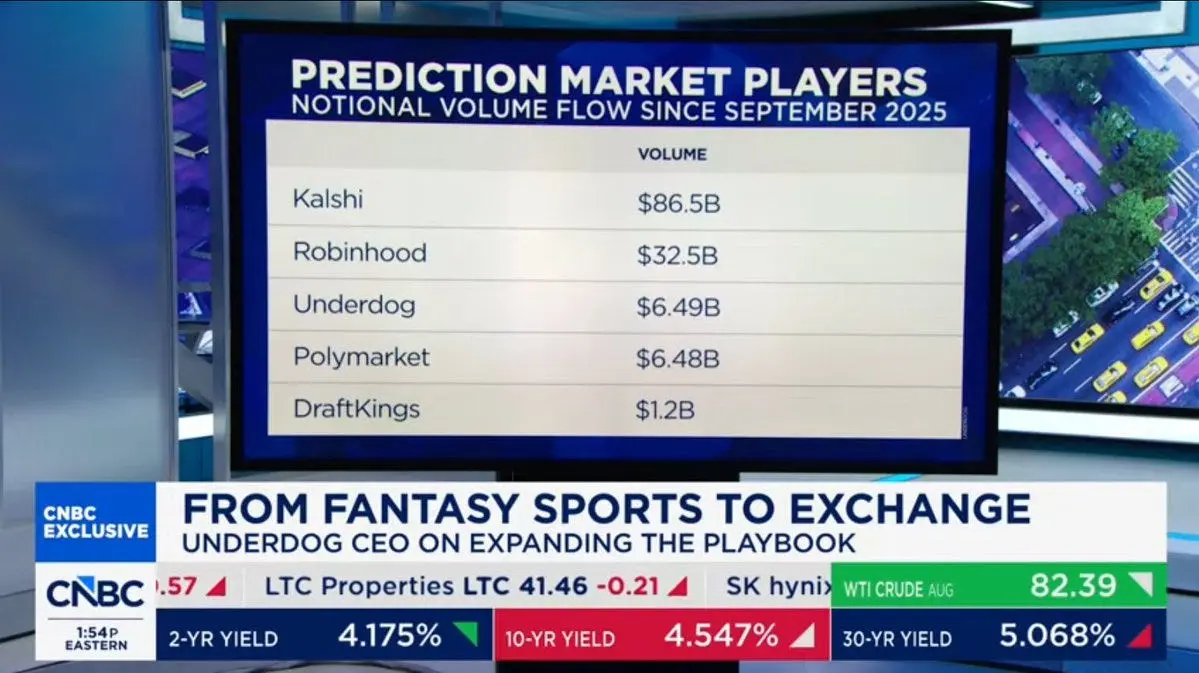
We said prediction markets are a bigger opportunity than fantasy games or even regular sports betting. But want to know just how big?
$1.1 billion.
You see, Underdog was sold to UK-based IG Group for that price during the summer. And when IG explained the lofty deal to investors, it gave us a pretty good idea of what it thinks Underdog will look like in a few years.
In 2025, prediction markets accounted for just 14 percent of Underdog’s handle. For 2026, IG projected that number would jump to 46 percent. And down the road? Try 99 percent.
Knowing that, these five lawsuits make a little more sense now, don’t they? Underdog’s new owners are literally betting the farm on this side of the business. They simply can’t afford to risk being banned in any state, even in New Mexico’s betting market, which is small.
We will see if Underdog’s lawsuits can hold up in court (we’re still a ways away from any verdict). But at the very least, you got to give them credit for playing offense, not defense cause they were going to be targeted by states eventually.
 Online betting sites
