 by
by
Minnesota, more than most states, has tried to keep the sports betting boom that began in 2018 outside its borders. It mostly succeeded as the state is one of only 11 without any kind of legal sports betting.
All this despite having high demand for it. Minneapolis has major sports teams in all Big 4 American sports leagues, plus several high-profile collegiate programs. There was money to make off betting, but the state refused to allow its residents to gamble in-person or on mobile.
That was, until prediction markets hit the scene hard starting in 2025. Kalshi, Polymarket, and even DraftKings Predictions all work perfectly fine in Minnesota right now.
Minnesota responded by coming within a hair of banning them with a bill. But despite a bill signature form Governor Tim Walz, the courts blocked Minnesota from enforcing the ban, and prediction markets have stayed alive during this critical NFL betting period.
Kalshi is the platform that seems to draw the ire of states like Minnesota the most, but every top sports betting app now has a prediction market product. And DraftKings is being upfront with its intentions to spread that product even in a state like Minnesota where its sportsbook isn’t allowed.
DraftKings CEO Jason Robins had interesting comments in a recent “fireside chat” with investors. Let’s break it down and what it means for states such as Minnesota.
DraftKings Doesn’t Need Minnesota Sports Betting Anymore
Robins revealed this week that more than one million customers have already used DraftKings Predictions. He expects that number to reach multiple millions before the NFL season wraps up.
This growth is coming despite doom-and-gloom headlines and a battered stock price. Still, Robins also said DraftKings has already grabbed double-digit share in sports prediction markets and has roughly three times as many NFL offerings as Kalshi and Polymarket. We believe it due to DraftKings strong brand and existing sportsbook users that can be easily tapped into in marketing.
Remember, the DraftKings Predictions product didn’t come out until late 2025. Objectively, Robins’ company and other sports were late entrants to the market. That irony is not lost on the CEO.
“We’ve gone really quickly from objectively not the greatest prediction market to the best sports product,” he said in the talk.
But just because DraftKings is growing fast doesn’t mean this is automatically a better business than sports betting. Robins admitted margins on prediction markets are “a little lower” than what DraftKings is used to seeing elsewhere. That’s saying something when sports betting itself is already a low-margin business to begin with.
Still, Robins believes the gross profit opportunity could actually be higher because DraftKings can reach so many more customers with Predictions — especially in states where its sportsbook isn’t allowed to operate. That includes Minnesota, yes, but the big fish are California and Texas with their huge populations that don’t have regular sports betting.
Now put yourself in the shoes of Minnesota lawmakers. They’ve spent years trying to keep apps like DraftKings far, far away from its people. It worked until prediction markets opened a wide door for DraftKings and any other offer claiming to offer “sports contracts.”
Minnesota Is Losing On Both Ends
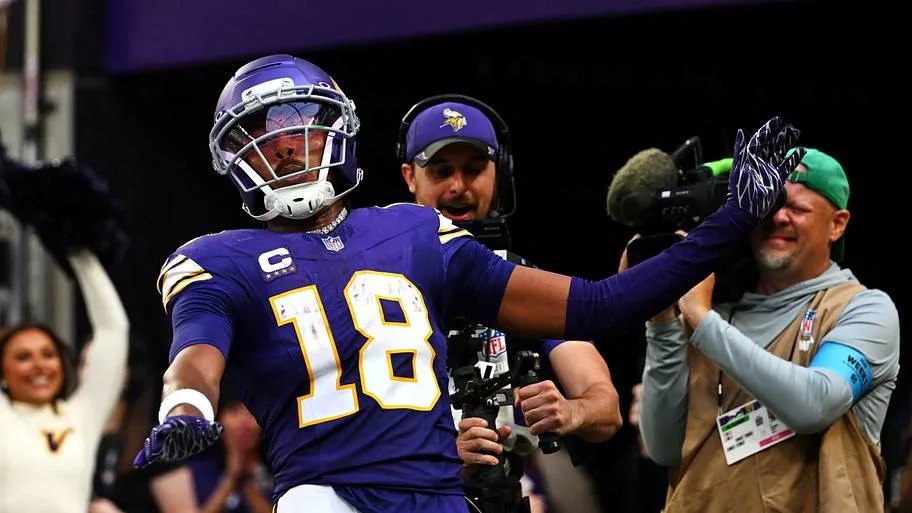
This is pretty much the worst-case scenario for Minnesota. The state fought tooth and nail to keep sports betting apps away. Those apps are well-funded and tried to lobby their way into the state, but lawmakers stayed firm (and probably turned down those dollars).
All that to end up with freely operating prediction markets that moonlight as sportsbooks. You can wager money on Vikings games on these platforms freely, no matter if it’s called a bet or “sports contract.”
So they didn’t stop sports betting-like activity. And they also missed out on the benefits that would’ve come with legalization. There are no sportsbook tax dollars rolling into the state. No licensing fees from DraftKings Sportsbook. No state-built regulatory system watching over these operators. Nothing!
That is the part that should sting. Minnesota turned down a regulated market because it didn’t want the problems that come with sports betting. But prediction markets have created many of the same concerns anyway — only now the state has less control over how the whole thing operates. Minnesota tried to shut that loophole too, of course, but the courts had other ideas.
And now you have a CEO like Robins directly saying they’re using DraftKings Predictions to get into non-legalized markets like Minnesota. They’re not even trying to hide the strategy.
The worst part? Minnesota can’t do anything about it. Courts stopped them once, and the Commodity Futures Trading Commission (CFTC) is also there to uphold prediction market rights at a federal level.
That’s about as much of a lose-lose scenario for Minnesota as humanly possible. It didn’t stop betting. It didn’t make any money off it. And it can’t do anything to change it (for now). It has to sting, doesn’t it?
 Online betting sites