NBA Player Average Height in 2026
 by
by
NBA players are among the tallest athletes in professional sports, and their size has always been one of the defining features of the league. In 2026, the average NBA player height sits between 6’6” and 6’7”, depending on roster construction and official listings for the season. That number shifts slightly from year to year as teams adjust playing styles, prioritize versatility, or lean into smaller lineups.
Still, even with those changes, the average NBA player remains significantly taller than athletes in most other major sports and far taller than the general population.

NBA players are among the tallest athletes in professional sports, and that size advantage shows up everywhere, from rebounding to rim protection. For the 2025–26 NBA season (the season that runs through 2026), the league-wide average height is listed at about 6 feet 7 inches (199.9 cm). Since rosters change every year, that average can move a bit from season to season, but it typically stays in the same neighborhood.
How Tall Is the Average NBA Player?
Using current season listings, the average NBA player checks in at roughly 6’7”. That number blends every role on a roster, from smaller guards to true centers, so it is best understood as a league-wide snapshot rather than a “typical” height for any one position.
What has changed over time is not so much the headline average, but how teams use different body types. In earlier eras, size in the paint was a bigger priority because offenses ran more through post-ups and interior scoring, which rewarded traditional big men. In today’s game, teams still value height and length, but they also demand movement skills and versatility. We see more forwards handling the ball, more centers defending in space, and more lineups built around spacing and pace.
In practice, height still brings clear advantages, especially for finishing near the rim, rebounding, and contesting shots. The downside is that extreme size can be harder to “carry” over an 82-game season if a player struggles with mobility or durability. That tradeoff is a big reason why modern roster building often favors athletes who combine size with coordination and lateral quickness.
Average NBA Player Height Compared to Other Sports
An average height of about 6’7” already sounds tall, but the difference becomes even clearer when you compare NBA players to athletes in other major leagues and to the general population.
NBA Players
As noted above, the average NBA player is roughly 6’7” (199–200 cm). Guards commonly fall between 6’2” and 6’5”, wings often range from 6’6” to 6’9”, and centers are frequently 6’10” or taller. Seven foot players make up a noticeable minority of the league, something that is extremely rare outside professional basketball.
NFL Players
In the NFL, the average player height is typically reported at around 6’2”, though it varies heavily by position. Offensive and defensive linemen often stand 6’4” or taller, while running backs and defensive backs are usually shorter. Even with larger overall body mass, the average NFL player is several inches shorter than the average NBA athlete.
Average Adult Male in the United States
For additional context, the average adult male in the United States measures about 5’9”, according to data from the U.S. Centers for Disease Control and Prevention. That means the average NBA player is roughly 9 to 10 inches taller than the typical American man.
When you look at those numbers side by side, it becomes clear just how concentrated height is at the professional basketball level. Even compared to other elite athletes, NBA players stand at the extreme end of the height spectrum.
Tallest and Shortest NBA Players
While the average NBA player stands around 6’7”, the league has always included physical extremes. Some players tower over even other professionals, while a select few have succeeded despite being far shorter than most opponents. These outliers highlight both the advantages and the limitations that come with unusual height.
Tallest NBA Players in History
Extreme height can be a major asset in basketball. Taller players can shoot over defenders, protect the rim without leaving their feet, and control rebounds simply because of their standing reach. Shot blocking, in particular, tends to favor players well above seven feet.
However, there are tradeoffs. Historically, very tall players have often dealt with durability concerns, especially involving foot and knee injuries. Lateral quickness can also become an issue in an era where big men are expected to defend pick and roll actions and switch onto smaller players.
Who Is the Tallest NBA Player?
The tallest players in NBA history are Gheorghe Mureșan and Manute Bol, both officially listed at 7’7” (231 cm). Mureșan played six NBA seasons in the 1990s and even led the league in field goal percentage during the 1995–96 season. Bol, known for his shot blocking ability, recorded more blocked shots than points during his career, a rare statistical profile.
No player taller than 7’7” has appeared in an official NBA game, making that height the historical ceiling at the professional level.
Shortest NBA Players in History
Although height is a clear advantage in professional basketball, several undersized players have carved out successful careers through speed, ball handling, and elite skill development. The most famous example is Muggsy Bogues, who stood just 5’3” (160 cm) and remains the shortest player in NBA history. Despite giving up more than a foot to many opponents, Bogues played 14 seasons and became a reliable starting point guard.
Shorter players often rely on quickness, low center of gravity, and advanced court vision to offset size disadvantages. On defense, they may struggle to contest taller shooters, but they can pressure ball handlers and disrupt passing lanes. Offensively, tight ball control and perimeter shooting become essential tools.
Notable Short NBA Players
Several other players under 6 feet tall have left a mark on the league:
- Spud Webb (5’7”) – Won the 1986 NBA Slam Dunk Contest despite being one of the shortest players in the league.
- Nate Robinson (5’9”) – A three-time Slam Dunk Contest champion known for explosive athleticism.
- Isaiah Thomas (5’9”) – Finished fifth in MVP voting during the 2016–17 season after averaging 28.9 points per game.
These examples show that while extreme height can shape the game, elite skill and athletic ability can still overcome physical limitations at the highest level.
Examples of Exceptionally Tall NBA Players
Players above 7 feet tall are rare even within the NBA. In most seasons, only a small percentage of the league is officially listed at 7’0” or taller. Those who measure 7’3” and above are even less common, which often makes them immediate matchup problems because of their standing reach and shot blocking range.
Extreme height can change defensive schemes, especially around the rim. At the same time, modern offenses frequently pull big men away from the basket, so mobility and coordination remain just as important as raw size.
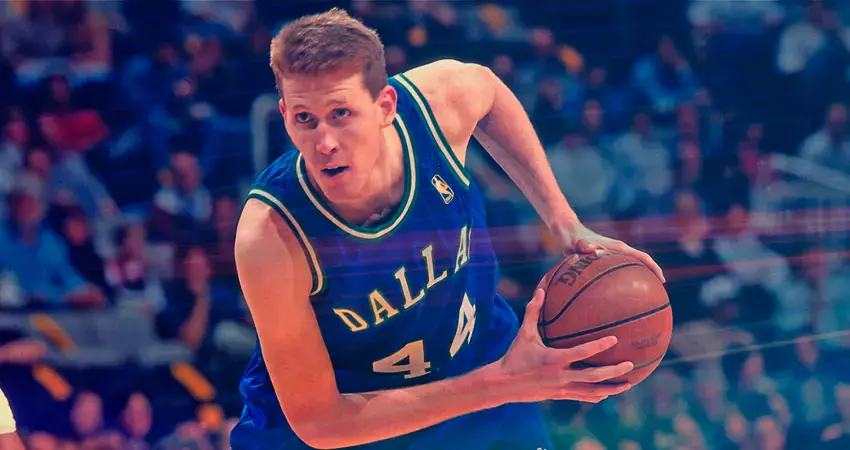
List of the tallest NBA players
In 2026, there are 42 players over 7’0″ (213cm) tall. Here are the six tallest current NBA players:
- Victor Wembanyama, Spurs – 7’4” (224 cm)
- Zach Edey, Grizzlies – 7’3″
- Rocco Zikarsky, Timberwolves – 7’3″
- Donovan Clingan, Trail Blazers – 7’2″
- Kristaps Porzingis, Warriors – 7’2″
- Walker Kessler, Jazz – 7’2″
Although these men are giants, they’re not the tallest ever. That accolade goes to these ballers:
- Gheorghe Mureșan – 7’7” (231 cm)
- Manute Bol – 7’7” (231 cm)
- Yao Ming – 7’6” (229 cm)
- Shawn Bradley – 7’6” (229 cm)
- Tacko Fall – 7’6” (229 cm)
While height alone does not guarantee success, these players demonstrate how unusual physical dimensions can influence rebounding, shot blocking, and scoring efficiency near the rim.
How Common Are 7-Foot Players in the NBA?
Seven foot players are rare in the general population but relatively common in professional basketball. In a typical NBA season, roughly 25 to 35 players are officially listed at 7’0” (213 cm) or taller. With 30 teams carrying 15 standard roster spots, that usually represents around 6 to 8 percent of the league.
By comparison, height studies frequently estimate that far less than 0.01 percent of the global male population reaches 7 feet tall. That contrast highlights how heavily professional basketball selects for extreme height.
Even so, not every seven footer plays the same role. Some operate primarily as rim protectors and rebounders, while others stretch the floor as perimeter shooters. In today’s NBA, simply being 7 feet tall is no longer enough. Teams expect mobility, defensive versatility, and offensive skill alongside size.
Overall, the average NBA player in 2026 still stands around 6’7”, reinforcing the league’s long standing reputation for height. While styles of play continue to evolve, size remains one of the defining physical traits of professional basketball.
What the average height of NBA Players tells us in 2026
The average NBA player height in 2026 sits at roughly 6’7”, a number that has remained relatively stable even as playing styles have evolved. While the league now emphasizes spacing, three point shooting, and positional flexibility more than in past decades, height continues to shape how teams defend the rim, control rebounds, and create mismatches.
Compared to the average American male at about 5’9” and the average NFL player at roughly 6’2”, NBA athletes occupy an extreme end of the height spectrum. Even within the league, true seven foot players remain a small minority, and those who measure 7’3” or taller are exceptionally rare.
Ultimately, height remains one of the defining physical traits of professional basketball. However, in today’s NBA, it is most valuable when paired with mobility, coordination, and skill. The league may continue to evolve, but the average NBA player in 2026 is still significantly taller than athletes in most other major sports.
Sources
- NBA.com/players
- Wikipedia
See below the top sportsbooks where you can wager on the NBA online and choose the best one for you.


NBA Players' Heights - FAQ
Find answers to common questions bettors like you have when researching which sportsbook to join.
In 2026, the average NBA player is approximately 6 feet 7 inches tall, which is about 200 centimeters. That number is calculated using official team roster listings across all 30 franchises. While the exact figure can shift slightly from year to year depending on roster changes, the league average has consistently remained in the 6’6” to 6’7” range for many seasons.
To put that into perspective, the average NFL player is around 6 feet 2 inches tall, and the average adult male in the United States is about 5 feet 9 inches. This means the typical NBA player in 2026 is roughly 10 inches taller than the average American man, highlighting just how height concentrated the league truly is.
As of the 2025–26 NBA season, the tallest active NBA player is Victor Wembanyama, who is officially listed at 7 feet 4 inches (224 cm).
No active player in 2026 is listed taller than 7’4”. While the tallest players in NBA history were 7’7” such as Gheorghe Mureșan and Manute Bol, Wembanyama is currently the tallest player in the league.
As of the 2025–26 NBA season, the shortest active player in the league is Jacob Gilyard, who is listed at 5 feet 8 inches (173 cm).
Gilyard has been one of the few players under 5’10” on an NBA roster in recent seasons. While he is significantly shorter than the league average of about 6’7”, his quickness, ball pressure, and perimeter shooting have allowed him to compete at the professional level.
For historical context, the shortest player in NBA history remains Muggsy Bogues at 5 feet 3 inches, but among active players in 2026, Gilyard is the shortest.
The tallest player ever in NBA history is Gheorghe Mureșan, who was officially listed at 7 feet 7 inches (231 cm).
He shares that distinction with Manute Bol, who was also listed at 7 feet 7 inches. Both players are recognized as the tallest in league history, and no player taller than 7’7” has appeared in an official NBA game.
The shortest player in NBA history is Muggsy Bogues, who stood at 5 feet 3 inches (160 cm).
Bogues played 14 seasons in the NBA, most notably with the Charlotte Hornets. Despite being over a foot shorter than the average NBA player, he built a long career through elite quickness, ball handling, and defensive intensity. No player shorter than 5’3” has ever appeared in an official NBA game.
For the 2025–26 NBA season, the average height of an NBA guard is approximately 6 feet 4 inches (193 cm).
Point guards tend to fall slightly below that number, often in the 6’1” to 6’3” range, while shooting guards are typically taller, commonly between 6’4” and 6’6”. When you combine both positions, the overall average for guards lands around 6’4”.
That means the average NBA guard in 2026 is still several inches shorter than the league-wide average of about 6’7”, but significantly taller than the average adult male in the United States.
For the 2025–26 NBA season, the average height of an NBA center is approximately 6 feet 11 inches (211 cm).
Most starting centers are listed between 6’10” and 7’1”, with some exceptions on both ends. While traditional centers were almost exclusively seven foot players in past decades, today’s game includes a few slightly smaller, more mobile big men who still play the position effectively.
Even so, centers remain the tallest position group in the NBA, standing several inches above the league-wide average of about 6’7”.
There are typically between 25 and 35 players officially listed at 7 feet (213 cm) or taller.
With 30 teams carrying 15 standard roster spots, that usually means about 6 to 8 percent of the league is seven feet or above in a given season. The exact number can shift slightly depending on roster moves and two way contracts, but it consistently falls within that range.
For perspective, seven foot individuals represent an extremely small fraction of the global population, which makes their concentration in the NBA uniquely high compared to any other major professional sport.

Trent is a professional sports journalist specializing in UFC, MMA, and esports coverage. His work has been featured in prestigious publications such as USA Today Sports, Vice, Bloody Elbow, Fight! Magazine, UFC 360, and Narratively. Trent's connection to MMA dates back to the early days when he and his friends pooled their resources to purchase the pay-per-...
Read More About the Author Moneyline betting