 by
by
You can be No. 1 and No. 2 in the legal sports betting industry, as FanDuel and DraftKings are, but it doesn’t mean things are gravy. They’re not.
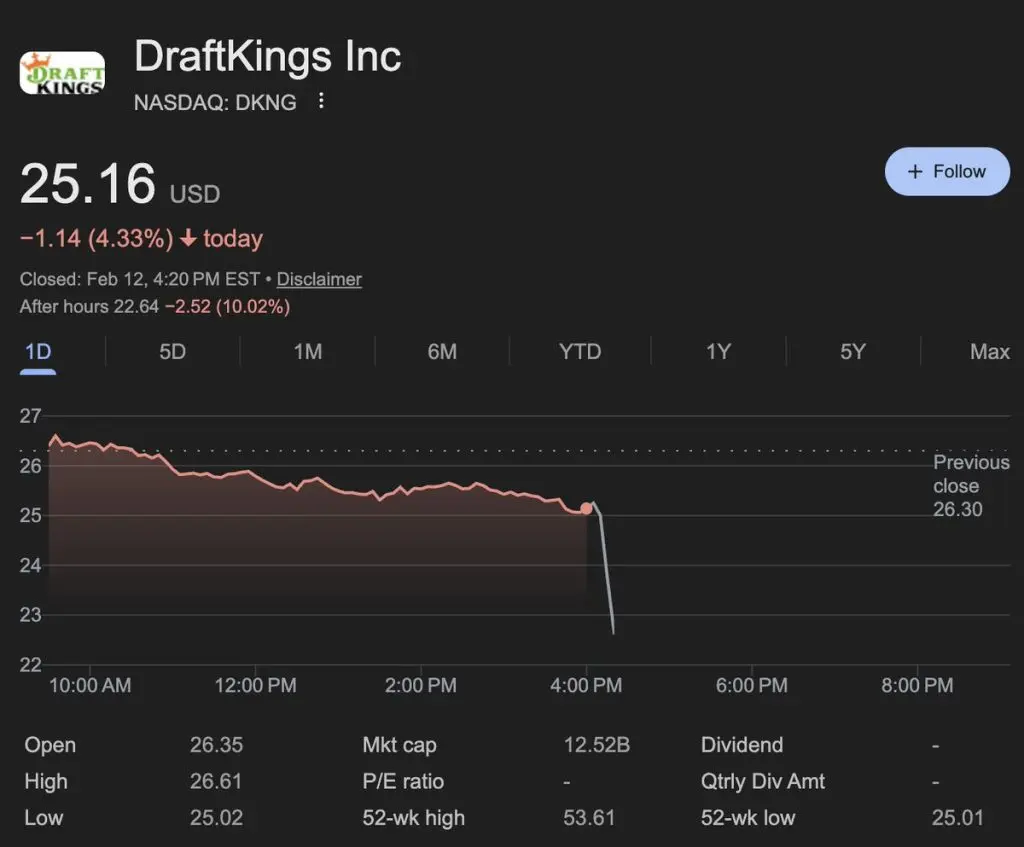
Both companies’ stocks have been cut down big time. DraftKings is down 36 percent year to date, and Flutter Entertainment (the parent company of FanDuel) is doing even worse — a whopping 50 percent drawdown. And Wall Street thinks it could get even worse. Yikes!
How did we end up here? It’s more than one thing. The rise of prediction markets, yes, but two, maybe traditional sports betting has sort of peaked. Yes, really, which we’ll get into in this article, and why Florida could be a key to stopping the pain for the top sportsbook operators.
Wall Street Is Bearish On Sports Betting Stocks
Here comes the pain? That’s what Stifel and Citizens JMP Securities believes. Both believe that neither DraftKings or FanDuel will hit their EBITDA (Earnings Before Interest, Taxes, Depreciation, and Amortization) expectations. That would only cause more investor panic, which is already high due to the perceived threat of prediction markets eating away at sportsbook market share (we’ll get to that soon).
But a perhaps more worrisome issue (that’s flying under the radar) is that sports betting growth is topping out. We have 39 states with legal sports betting already — leaving only 11 with the potential risk to change their mind. Of those two, all eyes are on California and Texas sports betting, which are massive markets for growth. So far, neither state has expressed serious interest at changing their minds and legalizing.
If new states aren’t legalizing, then growth will have to come from the 39 states that do have betting set up already (some of which, only allow it in-person so no DraftKings and FanDuel there either). So far in 2026, the growth is nowhere to be found, and might even be going down.
The signs are there. Across the board, we saw Super Bowl betting down near double digits from the 2025 game. The newest sports betting market, Missouri, posted less revenue in its first three months of launching. And if Legal Sports Report is accurate, of the 32 states that publicly report betting revenues, January and February were down 3.3 percent from the year prior.
Wall Street believes this to be true. Stifel estimates handle will be down about 2 percent this quarter as opposed to a year ago. Citizens thinks FanDuel specifically will be down 8 percent, and DraftKings will be up 3 percent (which will underperform Wall Street estimates of 5 percent growth).
But… if there’s a glimmer of hope, these numbers could be cyclical more than structural. No one ever said sports betting grows nonstop. Sometimes, a boring matchup (Seahawks vs. Patriots) and non-bettor-friendly outcomes (a few March Madness top seeds losing early) hurts growth. That stuff happens once in a while, and can rebound. Perhaps that’s a factor in the sluggish Q1 performance so far.
Prediction Market Panic Might Be Overblown
The stocks have most tumbled off the idea that top prediction markets like Kalshi and Polymarket are going to eat sportsbooks’ lunch. But the Wall Street firms we’ve mentioned — Stifel and Citizens — are less concerned about that.
Stifel, for example, says that prediction markets are affecting handle by a meager low single-digit percentage. It’s not a nothingburger, but not the sky-is-falling reaction we’ve seen out of the stock prices. Not only that, but the economics don’t support the panic either. Prediction markets earn about 1 to 1.5 percent in trading fees, which is peanuts compared to the usual sportsbook hold rate of 7 percent.
Plus, Stifel believes regulations could slow down the explosive growth of prediction markets. The Commodities Futures Trading Commission (which regulates prediction markets) is actively creating new rules around the industry. What sports outcomes can and can’t be wagered on is central to that, with many believing player-style props would be eliminated. If so, that’d be catastrophic for prediction platforms, which do around 40 percent of their volume from those specific markets.
And have investors forgotten DraftKings and FanDuel have their own prediction market platforms now? They do, and they’re investing big in them to grow in nascent markets like Florida, as we explain next.
Sportsbooks Are Betting Big On Their Prediction Markets
According to Citizen, DraftKings has spent $200 million on its prediction market, mostly on marketing. Flutter is expected to spend $300 million. Those are sizable figures! So if prediction markets do become existential threats, who’s to say these bookies — with better name recognition than the likes of Kalshi anyway — won’t siphon some of that money right back?
If anything, we think these prediction markets have a better shot at leading to growth than loss. The new platforms that DraftKings and FanDuel both launched are available in big-money states like California, Texas, and Florida. It’s their biggest inroads to those states, and likely only one.
Florida and the Seminole Tribe have a 30-year deal that’ll run until 2051. The only way DraftKings and FanDuel can play here for the next three decades will be through DFS (daily fantasy sports) and prediction markets. But again, investors aren’t even considering that possibility.
We’re not here to give investment advice, but given all the facts we presented in this piece, this feels more like a market bottom to us than the start or another leg down…
 Online betting sites