 by
by
Minnesota has dominated the new cycle this whole year. Maybe not always for the best reasons (daycare scams and ICE shootings), but it’s been squarely at the intersection of politics and news all of 2026. You can say that again.
In a first, Minnesota has banned prediction markets like Kalshi, Polymarket, and sports betting apps that offer it too (e.g. FanDuel Predicts or DraftKings Predictions). But… the war isn’t over. These prediction markets are fighting tooth and nail to get back into the state.
It’s not just they want to have access to Minnesota users. More than anything, it’s about protecting its business model all over the United States. Minnesota could set a precedent that’s unfavorable to the prediction market business. Keep on reading, and we’ll explain.
Minnesota Signs Ban Into Law
Many, many states have tried (and failed) to ban prediction markets. But somehow, Minnesota is the first to get prohibition into a signed bill.
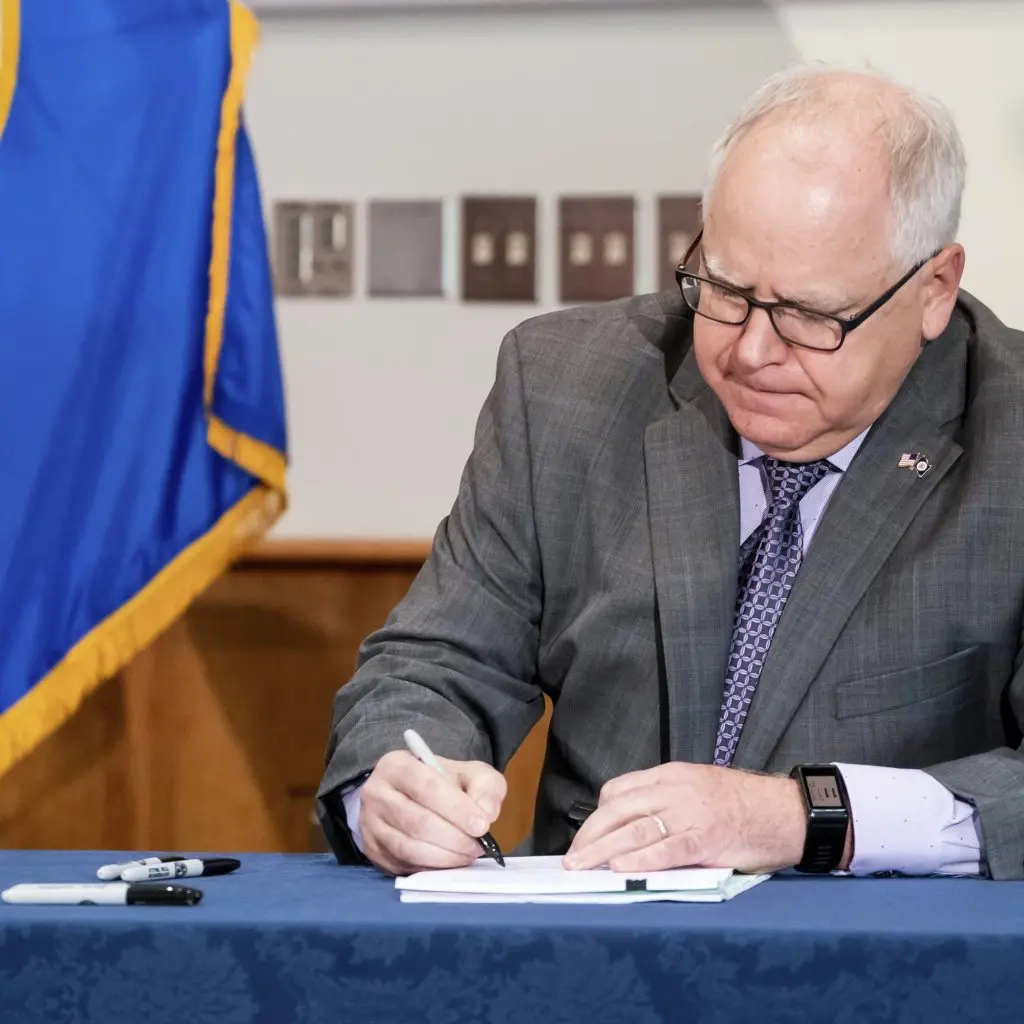
Governor Tim Walz signed the legislation in May, however, the law doesn’t take effect until August. The law would make it a crime to operate, host, or advertise prediction markets in the state. The language is broad enough that any company offering “events contracts” would have to leave Minnesota altogether or risk serious legal consequences.
The state’s argument is what you’ve already heard other states say: prediction markets are gambling products dressed up as something else. At the end of the day, users are staking money on future outcomes across sports, elections, war, and so on. Of course, state lawmakers believe that activity should be regulated under Minnesota law, not federal commodity laws as is the case now (more on that later)
Minnesota leaped into action because they’re anti-betting. There is no commercial sports betting in Minnesota — making them one of 11 states holding out on legalization in the US. Tribal gaming is allowed, and lawmakers think prediction markets are creating a backdoor way for residents to access sports betting without any of the protections, taxes, or oversight that normally come with legalization.
But if you thought prediction markets would accept their fate and go quietly into the night, you’d be very, very wrong…
Prediction Markets Are Fighting Back
Want to know serious things are getting? The Trump administration immediately sued Minnesota over the law. Kalshi followed with its own lawsuit. And now Polymarket has entered the fight as well, filing a federal lawsuit arguing the state has no authority to regulate federally approved event contracts. Back to back to back lawsuits, including from the sitting government.
All three parties are saying the same thing: Minnesota is regulating something it simply doesn’t control. Since the jump, prediction markets have avoided being called sportsbooks. Instead, they say their products are event contracts governed by the Commodity Exchange Act and regulated by the Commodity Futures Trading Commission (CFTC). In their view, Congress already decided who oversees these markets, and that regulator is the CFTC — not Governor Walz, not Minnesota lawmakers, and not state gambling agencies.
That’s why the companies are treating this as an existential fight. Like we said before, losing Minnesota is inconsequential at the micro level since it’s a small market anyway. The real danger is at a higher level, and the possibility of setting a precedent.
More than a dozen states have introduced legislation targeting prediction markets. If Minnesota’s ban survives legal scrutiny, every other state suddenly has a roadmap to do the exact same thing. That’s a Freddy Krueger nightmare scenario for this new industry…
The Fight Is Becoming Increasingly Political
What’s fascinating is how quickly this issue has stopped being about prediction markets and started being about American politics in general.
What do we mean by that? Well, Minnesota is led by Governor Tim Walz, one of the Democratic Party’s highest-profile figures after his vice-presidential run. On the other side is the Trump administration, which has aggressively defended prediction markets and repeatedly argued that the federal government — not states — should be regulating them.
Prediction markets have become increasingly tied to Trump’s brand. Trump Media has plans to roll out prediction market products through a partnership with Crypto dot com. Then there’s Donald Trump Jr., who actively serves as an adviser to Kalshi and Polymarket. Yes, both of them. Taken together, this has created the perception that prediction markets are receiving friendlier treatment under the current administration.
The result is that every new prediction market fight now turns into a political fight. Democrats frame the industry as an unregulated gambling loophole. Republicans frame it as financial innovation being attacked by overreaching states.
And of course, people are “picking sides” based on their political party, not facts. Are you a MAGA lover? Boom, you love everything Trump promotes. A bleeding liberal? Welp, you oppose all things Trump.
That’s why we’re increasingly getting convinced the fate of prediction markets could come down to one thing and one thing only: who’s sitting in the presidential office or holding control of Congress. It’s really that simple… and for now, this is squarely on the side of Republicans. But with midterms around the corner, that can all change on a dime.
 Online betting sites