 by
by
All across the country, we’re seeing state after state come out and try to ban prediction markets from accessing its residents. So far, none of those attempts have been fruitful, as Kalshi is available in all 50 states.
Even Idaho has tried to put a stop to ‘em. Back in March, Idaho Attorney General Raúl Labrador joined a 39-state coalition challenging the Commodity Futures Trading Commission (CFTC). That’s the federal agency that’s been given power to oversee prediction markets, and wrongfully so, argues this coalition.
It’s early, but so far, nothing has come out of that coalition. Neither has any individual state lawsuit against prediction markets.
But there’s a new federal act being proposed that might have more sway. Might because it challenges prediction markets at the federal level — the same level it bypasses state regulations. Keep on reading, and we’ll tell you more about this act and its potential impact in Idaho.
Congress Tries A Different Approach
Congress has taken notice of prediction markets, perhaps spurred by stories of insider trading on everything from the capture of Venezuelan President Nicolas Maduro to Donald Trump’s teleprompter operator. More and more hearings have taken place on Capitol Hill, and now, there are talks of a brand new act.
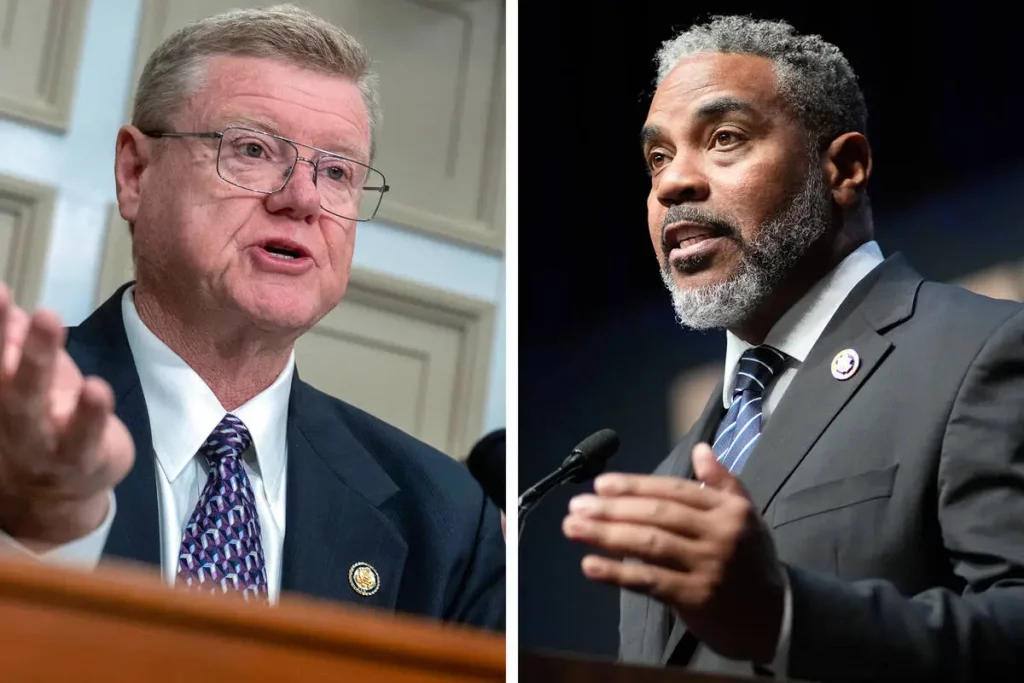
The act is being led by a pair of Nevada lawmakers —Rep. Steven Horsford (a Democrat) and Rep. Mark Amodei (a Republican). In July, the two introduced the Prediction Markets Are Gambling Act. Instead of arguing over whether the CFTC is interpreting existing law correctly, the bill wants to change the law itself. In other words, it goes straight to the source of prediction markets’ authority.
The proposal would amend the Commodity Exchange Act to prohibit federally regulated prediction markets from offering sports event contracts and casino-style games. If it somehow became law, companies like Kalshi couldn’t simply point to federal oversight anymore because Congress itself would be saying these products don’t belong under the CFTC’s umbrella.
It probably comes as no surprise that the bill’s sponsors come from Nevada. Las Vegas betting has taken a hit over the last few decades. First, from the rise of tribal and commercial casinos in other states, then the proliferation of legal sports betting countrywide, and now prediction markets. The state desperately wants to stop the bleeding.
But again, since it’s a federal bill, it would affect all 50 states, not just Nevada. Idaho, for one, would be happy. Like other states, Idaho isn’t fond of their local regulations being side-stepped by prediction markets because of a weirdly enforced federal rule.
But here’s the real question: does the Prediction Markets Are Gambling Act have a chance to win? Let’s cover it in the next section.
The Bill Leaves Little Room For Interpretation
One thing the lawmakers clearly learned from the prediction market debate is that definitions matter. A lot!
For months, the prediction market industry has argued these aren’t sports bets. They’re “event contracts.” Opponents have argued that’s just fancy legal mumbo-jumbo for betting. This bill attempts to end that debate by spelling everything out in black and white — and leaving no grey area.
It defines a “sporting event or athletic competition” as “any live or virtual contest involving physical activity or skill in which individuals or teams compete and performance determines an outcome or statistical result, including amateur, collegiate, and professional sports.” Folks, that’s about as broad as it gets, and that’s by design. NFL games. College football. UFC. Tennis. Golf. Esports. If it’s a sporting competition of some sort, this act wants prediction markets nowhere near it.
The bill is equally aggressive when it comes to casino games. It specifically lists “slot machine games, video poker, blackjack, roulette, craps, any other casino-style table game, bingo, lottery, and any simulation of any of those games.” The goal is obvious: don’t leave the slightest of loopholes for companies to exploit.
What It Could Mean For Idaho
Here’s the part Idaho lawmakers will probably like most. The piece of legislation says nothing in the act should “be construed to preempt any State law or rule that regulates or prohibits” sports betting or casino-style gaming.
Of course, that’s music to the ears of Idaho movers and shakers. Idaho is one of the harshest anti-betting states around. No sports betting in Idaho, and no casinos. This bill would reinforce that states still get to decide what gambling is allowed within their own borders. And in Idaho, that means nothing (besides a state lottery).
But… let’s pump the brakes a little. This is only a proposed bill. It has just been introduced and now heads to the House Agriculture Committee, the same committee that held this week’s hearing on prediction markets. Congress is also about to leave for its summer recess, so nobody should expect any immediate action.
Still, it’s worth paying attention to just because it’s a whole new way to fight back against prediction markets. Nearly every challenge to prediction markets so far has tried to work around federal law. This one rewrites federal law instead, and that may end up being the winning strategy. We shall see…
 Online betting sites