 by
by
Days before Minnesota was to become the first state in the country to officially ban prediction markets like Kalshi and Polymarket… a federal judge denied them. That’s right, at the last hour, the ban was put on pause. Not reversed, just stopped temporarily.
This is a massive story that has implications for the entire sports betting industry — not just Minnesota betting. Keep on reading, and we’ll tell you all about it.
What The Federal Judge Said
Meet Judge Katherine Menendez. She serves in the United States District Court for the District of Minnesota (yes, that mouthful is a real title).
She was pushed into action by the Commodity Futures Trading Commission (CFTC), Kalshi, and Polymarket, who all joined forces to challenge the new Minnesota law that would’ve banned them from operating.
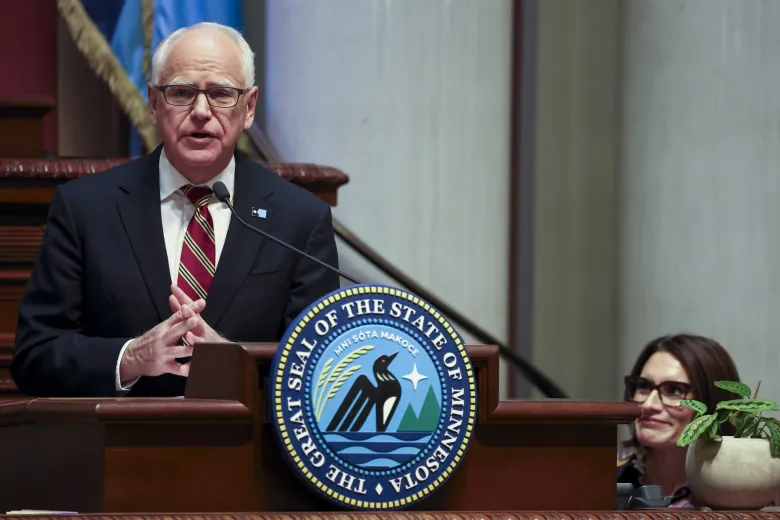
If you recall, this law was signed by Gov. Tim Walz earlier this year, and it had bipartisan support. The law was going to make it a felony — not a misdemeanor — to host or advertise prediction markets in Minnesota.
When evaluating the case, Menendez said Kalshi and Polymarket are designated contract markets, which gives the CFTC “exclusive jurisdiction” over certain swaps traded on those platforms. That includes contracts tied to sports-related things like the Vikings win total to geopolitics such as traffic on the Strait of Hormuz. Both are fair game, per the judge.
Now, this doesn’t mean Minnesota lost, and the law is done for. No, no, Menendez specifically said the injunction is temporary and can even be narrowed down later. In a somewhat funny twist, she specifically called out a market around the Love Island TV show an example that might fall outside the CFTC’s regulatory powers.
But for now, Minnesota can’t enforce the ban against these federally regulated platforms. Menendez said the companies faced a threat of “irreparable harm” if the law kicked in before the courts had time to sort out who actually has authority. Translation: keep everything as-is until the legal mess gets untangled.
To no one’s surprise, Minnesota lawmakers aren’t thrilled about the ruling. Most released statements afterward, but we took a liking to this quote from Rep. Emma Greenman:
“If it walks like a duck and if it quacks like a duck, it’s gambling,” she said. “It’s a duck, and we should be able to regulate it in the public interest.”
Minnesota Meets Same Fate As Other States
The irony here is Minnesota isn’t alone here. State after state has tried to curtail prediction markets, only to run head-first into the same problem: Uncle Sam says otherwise. The CFTC’s continued stance is that Kalshi and other registered exchanges fall under federal commodities law, which largely takes individual state gambling regulators out of the equation.
The most notable example was New Jersey — which led the reversal of sports betting at the federal level in 2018. The state also tried stopping Kalshi from offering sports contracts, but a federal appeals court sided with Kalshi in April. The court said the company had a strong argument that federal law preempts New Jersey’s gambling rules. Womp womp womp.
Not only is the CFTC holding its ground, but they’re also counter-suing. States like New Mexico and Wisconsin have caught cases from the Feds for trying to regulate prediction markets. So yeah, it’s a non-negotiable topic in their eyes.
That’s not to say prediction markets are completely undefeated, though. Nevada and Washington have scored notable victories against Kalshi. Nevada got a court injunction that forced Kalshi to stop offering prohibited sports contracts in-state. Washington scored its own win when a federal judge refused to give Kalshi the protection it wanted from state gambling enforcement. So don’t count Minnesota completely out here.
Minnesota Tribes Want The CFTC To Back Off
Minnesota lawmakers aren’t the only ones trying to rid themselves of prediction markets. Two Ojibwe nations in the state — the Leech Lake and Mille Lacs bands — are now going directly after the CFTC too.
Both tribes submitted letters opposing a proposed federal rule that would help define what counts as “gaming” on prediction markets and how the CFTC decides which event contracts can stay live. Per the tribes’ letter, if the new rule goes through as written, sports contracts would be in the clear and thus allowed on tribal land.
That’s a huge deal to the tribes. Federal law has given them authority over gambling on their reservations for decades, and casino-style gaming is handled through tribal-state compacts. The CFTC would effectively bypass that with this rule.
There is no sports betting in Minnesota, but there are casinos, and all are tribal-led. Leech Lake operates three casinos, while Mille Lacs runs two inside the state. Of course, the money made here helps the tribes fund social services in their community, and the worry is that prediction markets will strip that away.
As you can tell, this whole situation is one giant tug-of-war between the federal government and everyone else. Minnesota is firmly stuck in the middle of it, and that’s likely to remain the case. It feels like every state is waiting for the Supreme Court to decide this because that’s the only power higher than the feds right now.
 Online betting sites