How to Bet on Sports in California
 by
Bob Duff
by
Bob Duff
If you’re wondering how to bet on sports in California, the first thing to understand is that California has not legalized state-regulated online sportsbooks like DraftKings, FanDuel, or BetMGM. That means Californians cannot legally place sports bets through the same licensed sportsbooks available in many other U.S. states. For a broader overview of sportsbook availability, betting options, and sites that serve California players, see our overview of California sportsbooks.
However, California residents still have several sports-related betting products and alternative platforms available, including California horse betting, daily fantasy sports, prediction markets, and offshore sportsbooks that accept California players. Each option works differently, comes with different risks, and follows different rules. You can also compare offshore brands in our sportsbook reviews page.
In this guide, we’ll explain what betting options are currently available in California, how sportsbook apps and betting sites work, what beginners should know before creating an account, and why using VPNs to access restricted sportsbooks can create problems for players.

Step 1: know which betting products exist in California
Attempts to legalize sports betting in California have come up empty. You can follow the latest updates on legalization efforts in our California sports betting legality guide. The major U.S. online sportsbooks such as DraftKings, FanDuel, and BetMGM aren’t legally accessible to California bettors. That leaves offshore books as one of the main alternatives currently available to California players.
That leaves Californians comparing several different product types: offshore sportsbooks, legal horse racing wagering, daily fantasy sports, and federally regulated prediction markets. Each option has a different legal status, risk level, and user experience, so beginners should understand the differences before creating an account.
While they may not be regulated in California, these offshore sportsbook sites are widely used by California bettors that have been operating for many years. The age to bet with offshore sites varies between 18 and 21 years old, depending on each site’s policies. A number of these sites also offer access to online casinos.
Most offshore sportsbooks that accept California players offer moneyline, spread, total, futures, prop, parlay, and live betting on popular sports like the NFL, NBA, MLB, NHL, and college sports. There’s also wagering on soccer, tennis, golf, MMA, and numerous niche sports. Offshore sportsbooks like Bovada, BetOnline, BetUS, and MyBookie have operated for many years and remain accessible to some California users, although they are not licensed by California regulators.
Similar to offshore sportsbooks, daily fantasy sports in California also operate within a legal grey area. In July 2025, California Attorney General Rob Bonta declared DFS, including pick’em and draft-style contests, illegal under state sports betting laws. However, all major DFS platforms continue to offer their product to California players. So, while you might not be able to bet on sports at DraftKings or FanDuel, California players can access the DFS platforms provided by each of these online sports betting sites.
Another option available to Californians is prediction markets. These platforms are federally regulated through the Commodities Futures Trading Commission (CFTC). They offer event contracts where users buy positions tied to the outcome of sporting events and other real-world outcomes.
California betting product comparison
| Betting Product | Available in California? | What It Covers | Important Notes |
|---|---|---|---|
| State-Licensed Sportsbooks | No | Traditional online sports betting apps like DraftKings and FanDuel | California has not legalized regulated sportsbooks |
| Offshore Sportsbooks | Yes | Sports betting markets, live betting, props, parlays | Not regulated by California authorities |
| Horse Racing Betting | Yes | Online and retail horse race wagering | Legal through approved pari-mutuel operators |
| Daily Fantasy Sports | Disputed / operator-dependent | DFS contests and pick’em games | Legal status remains disputed in California |
| Prediction Markets | Yes | Event contracts tied to sports outcomes | Federally regulated through the CFTC |
Availability does not always mean the product is licensed or regulated by California. State-regulated online sportsbooks remain unavailable, while offshore sportsbooks are not overseen by California regulators. Horse racing deserves separate treatment because California permits pari-mutuel wagering through licensed racetracks and CHRB-approved advance deposit wagering operators.
Step 2: choose a site or app that fits what you want to do
Once you’ve decided to bet on sports through an online betting site that is available to California players, the next step is determining which site is going to be the right option. You will want to go with the sportsbook that best suits your needs.
Are you someone who lives life on the go? Well, if that’s the case, finding a site with a sleek, intuitive mobile app is going to be of vital importance. You’ll want to sign up with a site that offers the same depth of markets and quality on its mobile app as you find on its desktop platform.
Every online sports betting site will offer a welcome bonus to encourage new players to sign up with their sportsbook. It’s important to remember that all welcome bonus offers are not built the same. Check the fine print. All sports betting sites will attach wagering requirements to bonus funds. This is how many times you must bet the bonus before it is eligible to be withdrawn from your account. The smaller the wagering requirement, the better it is for you.
Look to see what types of promotions the site offers beyond the welcome bonus offer. Once they’ve got you as a customer, do they forget about you, or continue to provide offers that make you feel welcome?
Finally, what types of bets you want to make is another important factor. If you like to bet on the NFL, look for a site providing rich markets on the sport. If you like to play parlays, seek out a site that makes it easy to assemble these bets. Many sportsbooks offer parlay calculators.
If you want to compare which sportsbook brands are available to California players and how their policies differ, see our California sportsbook legality by brand guide.

Step 3: create your account and verify basic requirements
After you’ve chosen the California sports betting site that’s the best one for your needs, you’re going to need to open up an account with that site. While it might seem a bit intimidating to new players, this is actually a relatively easy and painless process. You will likely complete it in a matter of minutes.
To initiate the process, go to the page of your chosen sportsbook. You’ll see a button that will say “join” or “sign up.” Click on that button. This will open up the sign-up page.
The first step will be to provide your personal information. This will include such items as your home address, your email address, and your cellphone number. To open a new account, another requirement will be the creation of a username and password that is unique to you.

The verification process will follow. You will receive an email or text from the sports betting site, which will include a verification code. To sign up with the site, you’ll have to copy the verification code and insert it into the required location on the site. You’ll be given a specific time limit to complete this process, so don’t let the clock run out on you. Leading online betting sites will also require that they see a copy of a government-issued photo ID to verify that you are of legal age to bet in your state.
The final step in the signup process will be funding your new California sports betting account. All sites will set a minimum first deposit to activate their welcome bonus offer. Ensure that you clear this hurdle and activate the bonus.
Step 4: make your first bet
After funding your sportsbook account, you’re ready to place your first sports bet. Most betting sites follow a similar process on both desktop and mobile.
- Choose the sport you want to bet on, such as the NFL, NBA, MLB, NHL, or soccer.
- Select the game or event you want to wager on.
- Pick your bet type, such as a moneyline, spread, total, prop bet, or parlay.
- Click the betting odds to add the wager to your bet slip.
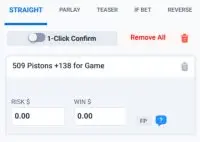
- Enter your wager amount and review the potential payout shown on the screen.
- Submit the bet and wait for confirmation from the sportsbook.
Moneyline bets are the simplest option because you’re only choosing which team or player will win. Spread betting involves a handicap set by the sportsbook, while totals betting focuses on if the combined score finishes over or under the listed number.
Before confirming any wager, double-check the odds, stake amount, and potential payout displayed in your bet slip.
Prop bets are wagers on outcomes within the game. There are game, team, and player props, all set as over/under plays. A prop bet could be on how many power-play goals a team will score first in an NHL game. It might be a bet on how many yards rushing a running back gains in an NFL game.
Parlays are a unique betting option in which a bettor can combine several outcomes into one wager. It’s sort of like playing the lottery. There’s a chance that you could win a major amount for a minimal outlay, but the odds are long that you’ll be successful.
Why VPNs are a bad idea
Virtual private networks (VPN) are designed to protect your identity, so you might think that they’d be ideal for working with an offshore sports betting site in the California market. You also might consider trying to sign up with FanDuel or another leading legal and regulated sportsbook in another state by using a VPN to hide the fact that you’re living in California.
However, the reality is that using a VPN with an online betting site is a recipe for disaster.
First of all, the use of a VPN violates the terms of service for most online sports betting sites. Most sportsbooks explicitly prohibit the use of a VPN in their terms and conditions. A VPN directly conflicts with such factors as geo-compliance, anti-money laundering, and Know Your Customer (KYC) regulations that these sites are legally required to follow.
Players who are caught using a VPN can create massive problems for themselves. This could lead to their account being suspended, their winnings forfeited, and their funds frozen. Sports betting sites require players to provide a home address and confirm their identity to open an account. KYC checks mandate that proof of identity and address be provided by a player to make a withdrawal from their online sportsbook account.
Warning: Using a VPN to access online betting sites can get your account flagged, restricted, or closed. It may also lead to frozen funds, voided winnings, or failed identity checks.
Common beginner mistakes in California
If you’re a newcomer to sports betting in California, a word to the wise is that it’s always best to tread carefully at first. Treat sports betting as you would any other investment. Do your homework, never bet more than you can afford to lose, and shop around for the best bets.
- Betting more money than your bankroll can handle
- Chasing losses after losing bets
- Ignoring sportsbook bonus terms and rollover requirements
- Overusing long-shot parlays
- Failing to compare odds across sportsbooks
- Making emotional bets on favorite teams
- Ignoring injuries, lineup news, and weather conditions
Before claiming any sportsbook offer, read our guide to California sports betting promos to understand rollover requirements, bonus restrictions, and common wagering terms.
How to Bet on Sports in California FAQ
Find answers to common questions bettors like you have when researching which sportsbook to join.
California does not permit state-regulated online sports betting, but it does allow pari-mutuel horse-race wagering through licensed racetracks and approved advance deposit wagering operators. You can’t place bets on sporting events with FanDuel, DraftKings, or any of the leading online sports betting sites that are available in the 39 U.S. states that have legalized sports betting.
On the surface, you might think you’ll be shut out of sports betting in California, but that’s not the case. Offshore sports betting sites such as Bovada, BetUS and BetOnline are accessible to California players. They are regulated by countries other than the USA.
As part of the 2022 California election ballot, Proposition 27 would have legalized online sports betting in the state had it met with approval. However, the referendum was overwhelmingly defeated. That being the case, legal and regulated online sports betting remains inaccessible to California sports bettors.
That doesn’t necessarily mean that California sports bettors are being shut out of the opportunity to bet on sports online. They can choose from among several offshore sportsbooks to place wagers on the NFL, NBA, MLB, or whatever their sports of choice might be. Sportsbooks such as Bovada and Lucky Rebel are licensed by regulators outside of the USA.
The most popular method to bet on sports in the U.S. legal and regulated marketplace is on your phone or mobile device. Mobile sports betting accounts for the vast majority of wagers placed by American bettors. However, since legal and regulated sports betting hasn’t been approved in the Golden State, Californians won’t be using their mobile device to wager on sports with DraftKings or FanDuel.
They can, however, use their cellphone to place bets if they open an account with an offshore sportsbook like Bovada or BetUS. These sites are not licensed or regulated by California or any U.S. state gaming regulator, they operate under non-U.S. licensing frameworks.
A VPN disguises a person’s location and identity. It might seem like an ideal method to venture into California sports betting, opening up the opportunity to bet with FanDuel or BetMGM in another state where sports betting has been legalized. It could also hide a player’s identity if they sign up with an offshore sportsbook.
However, it may also open up a can of worms. Use of a VPN violates the terms of service for most online sports betting sites. A VPN directly conflicts with such factors as geo-compliance, anti-money laundering, and Know Your Customer (KYC) regulations. Players caught using a VPN could have their accounts suspended.
Sports betting in California can’t be done in the manner that is legal in 39 U.S. states. California hasn’t yet opted to go the legal and regulated route for retail or online sports betting. The major U.S. sportsbooks like Bet365, FanDuel, DraftKings and BetMGM aren’t legally accessible to California players.
Californians can still bet on sports, though. So-called offshore sites like Bovada, BetOnline and MyBookie are licensed and regulated in other countries such as Curacao. They offer online access to the same sports betting markets as offered in the U.S. legal and regulated marketplace.

Veteran journalist Bob Duff has been writing for over 30 years and has written 25 sports books, including authorized biographies of Johnny Bower, Desmond Howard, Ted Lindsay, Nicklas Lidstrom, and Gordie Howe. He is a member of the Hockey News' panel to select the 100 Greatest NHL players and an honorary member of the Elias Sports Bureau. He taught a course ...
Read More About the Author Online betting sites