 by
by
The NCAA are money-hungry hypocrites — that’s been the oldest argument in the book. It’s still kicked around even though there’s revenue-sharing between student-athletes and schools. Premier players are making millions or dollars for the first time, and still: the NCAA is the evil boogeyman to many critics.
That’s probably what Texas Tech quarterback Brendan Sorsby realized, and he’s leaning all the way into the argument, which isn’t all that accurate in 2026 anymore if we’re being honest. The hell if Sorsby cares, he’s just trying to protect his NCAA eligibility.
At all costs.
You’re going to want to keep reading this story. It’s not just a look at the Texas Tech quarterback taking the NCAA to court, but it’s an overview of how legal sports betting is affecting the collegiate game, for better and for worse. Allow us to explain.
Sorsby Plays Defense With NCAA Lawsuit
This story has been all over college football, but let’s quickly recap it in case you missed hearing about it: Sorsby transferred to Texas Tech a few months ago. He was one of the most hyped QB’s in the transfer portal so the Red Raiders, fresh off a College Football Playoff appearance, has a lot riding on him (more on that later).
Here’s the issue: Sorsby is currently ineligible to play for violating NCAA gambling rules. He began his career at Indiana, and while there, he made hundreds of bets on NCAA games, including his own team. Betting by itself is against NCAA rules, but it’s extra damaging when done on the team you play for. That carries a (potential) maximum penalty of losing eligibility for good.
Sorsby ain’t going to accept that without fighting back, though. This is why he filed an injunction in Lubbock County to preserve his eligibility for the 2026 season. The lawsuit accuses the NCAA of taking a “deeply hypocritical” position on gambling.
“The NCAA has weaponized his condition to shore up a facade of competitive integrity, while simultaneously profiting from the very gambling ecosystem it polices,” the filing says.
Believe it or not, the NCAA doesn’t actually have a sponsorship with any sports betting apps. Neither do the major conferences. Sure, a few teams have sponsorships with gambling entities, but surprisingly, the NCAA has restrained itself from completely milking this sports betting boom.
Knowing this, we’re not sure that the lawyer’s claims of hypocrisy will hold up. But Sorsby and his legal team have a backup argument: mental health.
Sorsby Admits To Betting On His Team
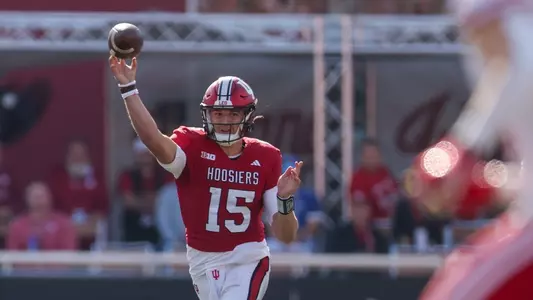
For what it’s worth, Sorsby isn’t denying he bet. According to court documents, Sorsby has fully admitted to placing small bets while he was at Indiana. We’re talking wagers ranging from $5 to $50. However, he says all of those were in favor of Indiana and its players doing well. Sorsby denies betting against his team, and by the way, he was riding the bench during these games, too, so he couldn’t affect them.
That distinction is going to be central to his argument. It’s harder to drum up support in the event he’s betting against his team or using inside information to place wagers. None of that appears to be the case here.
Sorsby says he had a gambling problem. By the end of his freshman season, he was “truly addicted to gambling” and placing hundreds of bets on anything and everything. Not just NCAA, but NFL betting and other sports too.
That’s why he’s currently in residential treatment for problem gambling. Seriously, he checked himself in, coincidentally, right after the story became public. Apparently, it’s only an addiction once other people find out.
What’s more, his lawyers argue the quarterback faces “irreparable harm” if the court does not intervene quickly and allows him to play. Get a load of this whopper of a quote:
“If I cannot practice with the team, it will be severely detrimental to my mental health and my development as an athlete,” Sorsby said. “Without access to coaching, teammates, and on-field repetitions, I cannot develop the chemistry and skills necessary to start at quarterback in the 2026 season.”
Time Is Of The Essence In This Case
The lawsuit is, in football terms, running a hurry-up offense by asking for a hearing by June 15. That date is not random. See, Sorsby has until June 22 to declare for the NFL supplemental draft. He’s a fringe NFL talent, but it’s likely he’d get a crack on one of 32 teams.
The lawsuit says Sorsby offered to sit out two games and help the NCAA become an advocate against problem gambling. The filing goes on to say the NCAA “has responded with silence, repeated information demands, and delay.”
In the world of NIL, going to the NFL actually hurts Sorsby more than playing college football. Reports say that Sorsby would have NIL deals near $5 million. He’s not getting anywhere near that in the pros on a rookie contract.
Sorsby has yet to play a snap for the Red Raiders, but he came in with a bit of a savior label. He transferred in from Cincinnati after throwing for 2,800 yards, 27 touchdowns, and only five interceptions last season. That type of production would, in theory, vault Texas Tech to the “next level.” The Red Raiders were shut out 23-0 in the CFP quarter-finals last year, and were dragged down by bad QB play all year long.
That’s why this case is under a bigger microscope than usual. This is a star quarterback at a program that loaded up to win now. The NCAA, caving in to that stardom and not punishing Sorsby, would set an awful example to other student-athletes. Damned if they do, damned if they don’t — that’s how it feels for the NCAA right now.
 Online betting sites