 by
by
Just when you thought Illinois sports betting couldn’t possibly get any greedier, they prove themselves to be, without a shadow of a doubt, the greediest legal sports betting marketplace in the country. This is pure extraction, by now.
Let’s talk about the greediest legal sports up to this point, shall we? First, Illinois raised its state tax rate from a flat 15 percent rate to a “sliding scale” of 20 to 40 percent. Top betting apps that earn the most revenue get taxed at that 40-percent rate, while smaller ones get the 20-percent minimum.
That was essentially a doubling of the state tax rate, but hey, we suppose it happens. Many other states have raised sports betting taxes, namely because they underestimated how successful the industry would be (and they need extra money to siphon from somewhere).
But the greed hit another level when the state implemented a per-wager on sportsbooks. This went into effect over the summer, slapping a 25-cent fee on every ticket a sportsbook gets. For the top-earning books — namely DraftKings and FanDuel — that charge jumps to 50 cents after getting 20 million tickets.
But if you thought Illinois politicians were done there, then you’d sorely be mistaken. They just proposed another tax on sports betting, this time at the city level. Yes, seriously. Keep reading and we’ll tell you about the diabolical plan (and pushback it’s getting).
Taxing Sports At A City Level?
The previous 20-40-percent tax we mentioned? Well, it was at the state level. But… this new idea would tax it at the city level, too. Yes, they stack on top of each other.
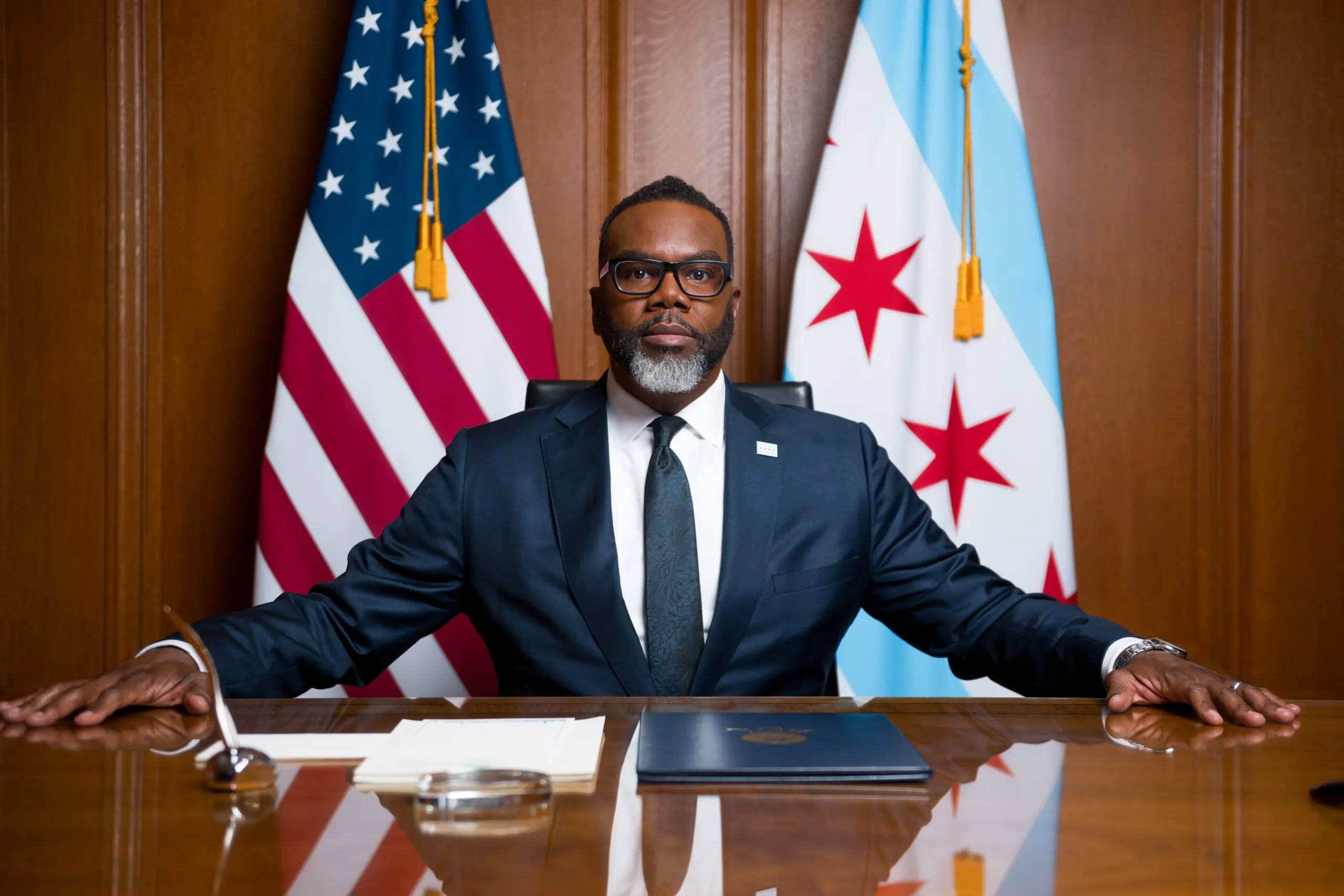
That’s right, Chicago mayor Brandon Johnson floated the idea in his latest $16.6 billion city budget proposal. He’s wanting a 10.25 percent levy on sports betting revenue earned within city limits. If approved, the new tax kicks in January 1, 2026.
Here’s the justification, straight from the mayor’s office: Chicago faces a $1.15 billion budget deficit, and this tax supposedly helps close that gap “without increasing the property tax levy or relying on regressive measures.” Johnson’s argument is that this is a “fair” way to generate revenue — pulling more from those who can afford it most.
In practice, though, this means sportsbooks (and the bettors who use them) are going to get hit again. State-level taxes are already brutal, and Cook County already takes its 2 percent slice from online bets. Add a city-level tax, and that’s triple-dipping. The city estimates it’ll rake in $26 million from this new cut — a rounding error in the grand scheme of a $1-plus billion budget shortfall, but another major squeeze on operators already stretched thin by Illinois’ aggressive tax code.
The idea of a citywide betting tax was pitched before so perhaps it’s not completely out of the blue. Earlier this year, a Chicago Financial Future Task Force suggested either a per-wager surcharge or a local revenue tax. Now, that “concept” has turned into legislation (but with a city tax instead). At this rate, don’t be surprised if local townships start asking for a piece next.
State Lawmakers Push Back
Finally, some good news: the Chicago tax is far from being official. It’s a proposal for now, and more than that, it’s getting blowback from state leaders. Illinois lawmakers are moving to stop it before it becomes official. A new bill, HB 4171, would rewrite the state’s Sports Wagering Act to make one thing crystal clear: only the Illinois legislature has the power to tax, regulate, or license sports betting. Not city mayors. Period.
The bill’s lead sponsor, Rep. Dan Didech, didn’t mince words. “When the legislature legalized sports betting in 2019, it was never our intent to allow local governments to create their own rules for this industry,” he said. Didech, who also chairs the House Gaming Committee, argues that Chicago’s proposed tax would hurt consumers, drive people toward popular offshore books, and siphon away state tax revenue — all while creating chaos in the market.
Four other Chicago-based representatives — Curtis Tarver, Edgar Gonzalez, Angelica Guerrero-Cuellar, and Mike Kelly — signed on as bill cosponsors. Together, they’re sending a message to City Hall: sports betting is a statewide business, not a city ATM machine.
The timing, however, complicates things. The Illinois General Assembly has already adjourned for the year, which means HB 4171 won’t even be heard until January 2026 when the next session begins. Still, the bill’s language is blunt — it calls Chicago’s move a “denial and limitation of home rule powers,” effectively stripping the city of authority before it even tries to enforce the tax.
So yes, Chicago’s proposal might look bold on paper, but it’s far from a lock. Between legal hurdles, political opposition, and the state’s desire to keep betting regulation under one roof, this fight could drag deep into 2026. For now, sportsbooks are likely holding their breath on the issue.
Then again, IF this goes through — and that’s still a big if at this point — we know the bigger losers will be bettors, not sportsbooks. Like they did with the ticket surcharge, bookies will likely pass on the costs to bettors, not eat it themselves. So Illinois bettors, you’re really the ones that ought to be holding your breath this proposal gets killed off.
 Online betting sites