 by
by

Betting news out of Texas has been quiet throughout 2026. That’s mainly because, unlike other states, Texas lawmakers did not meet for a legislative session this year. They meet once every two years, which means 2027 is their next chance at passing new legislation.
But there are early indications that prediction markets might get a bill next year. And if Texas history is any indication, it’ll be a hostile bill to remove prediction platforms. Keep on reading, and we’ll tell you why things are trending that way.
Lieutenant Governor Wants To Study Prediction Markers
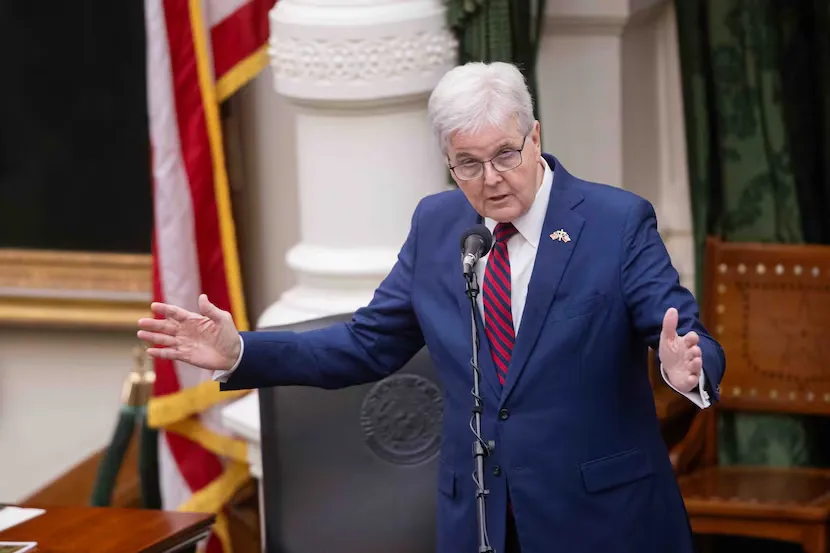
Just because there’s no legislative session this year doesn’t mean the top political leaders aren’t thinking about the next one. That’s exactly what Dan Patrick, lieutenant governor of the state, is doing. Patrick essentially leads the entire Senate and is right-hand man to the actual governor. So yes, he carries a lot of weight.
That’s why this headline, originally from late March, took us by surprise. Multiple reports came out saying that Patrick told his Texas senators to begin studying policy issues now so they can be ready to discuss and litigate them in 2027.
The issues? Datacenters, which are exploring across the country during this AI boom. THC, which is exploding in use, especially among teenagers. But the third one is what we care about — Prediction Markets. There were a slew of other issues, but these three were the most reported subjects.
So far, Texas has been quiet on the prediction market front. This despite the state being infiltrated by these platforms. Kalshi and Polymarket are fully accessible in Texas, and so are sports betting app companies in DraftKings Predictions and FanDuel Predicts. There are zero obstacles to being them stateside.
But… maybe there should be? These platforms offer markets on various sports outcomes. Cowboys win or lose, whether Cooper Flagg will score a set amount of points — all that stuff can be bet on despite Texas sports betting not being legal.
States across the country have accused these prediction markets of sidestepping their own rules and regulations around legal sports betting. Some of them have even filed lawsuits against the top platforms, others have began legislature to prohibit them. Would Texas do the same? We have some thoughts in the next section.
Texas Has Not Been Friendly To Sports Betting
There are only 11 states without legal sports betting. Texas is one of them, and they’re one of the most vocal against it. Maybe it’s the strong conservative culture, but there’s still a stigma against gambling in the state, especially from its leaders.
Look no further than Patrick himself. For years, he has been the sports betting roadblock in the Senate. Legalization supporters can bring up potential tax revenue (billions in Texas), consumer protections, residents already betting using offshore sportsbooks — whatever the argument, Patrick ain’t buying it. He’s openly said it won’t happen while he’s around, and other Republicans pretty much have to fall in line given Patrick’s power.
Governor Greg Abbott hasn’t exactly helped the industry either. In past years, he sounded more open to online sports betting than casino gambling, but even he has cooled on the idea recently. His concerns have shifted toward addiction, gaming scandals, and athletes being compromised (thank the NBA betting scandal with Chauncey Billups and Terry Rozier for that sentiment shift).
So if prediction markets end up in front of Texas lawmakers in 2027, don’t expect a friendly response. Lawmakers who already oppose sports betting are not going to suddenly embrace a product that looks like sports betting, works like sports betting, and just happens to call itself “event contracts.”
The Feds Might Force Texas’ Hand Before 2027
It may not even be up to Texas to figure out to prohibit it or not. By the time 2027 rolls around, it may have already been figured out by other states and/or the federal government.
You see, Texas is sort of behind the 8-ball here. So many other states have already sued Kalshi. What ends up happening with those lawsuits could give the entire industry an answer: Is this stuff going to be allowed or not? If so, is everything allowed to be a market or only certain things?
There’s a court in California that’s a month or two away from ruling if Kalshi can operate in Nevada, where the lawsuit was brought in the first place. If they vote it’s not allowed, that would counter a previous ruling in New Jersey that said prediction markets are fair game despite state laws.
If California rules that way, we could get what’s called a circuit split — two federal appeals courts giving different answers to the same question. That’s usually when the Supreme Court starts getting involved. And honestly, that feels like where this whole prediction market fight is headed anyway.
That’s why Texas might not get to control what happens with prediction markets within its borders next year. A lot can happen from now until January 2027 when that legislative session begins…
 Online betting sites