 by
by
Prediction markets were under the microscope during a recent hearing in the Senate. What’s funny is the meeting was supposed to be about sports betting integrity before devolving into prediction markets.
The May 20 meeting was called “No Sure Bets: Protecting Sports Integrity in America”, for Pete’s sake. The fact it quickly went toward prediction markets proves American lawmakers — on both sides — aren’t buying this whole “event contracts” idea that prediction markets and its federal regulator, the Commodity Futures Trading Commission, are spewing.
Let’s recap what went down at this meeting. It was purely a discussion, but another sign that lawmakers are getting serious about putting some guardrails on prediction markets like Kalshi and Polymarket.
The Skinny On The Event
We have some absolutely juicy quotes we wanted to share from the hearing, but before that, we want to level-set what this was. It was NOT a meeting that involved every single senator on the floor. No, only a select few bigwigs were there as this was a meeting for the Senate Commerce, Science and Transportation Committee.
The leader of this committee is Ted Cruz of Texas, who carries a big stick among senators. Obviously, the state he represents is one of the most influential, but more than that, Cruz enjoys a good relationship with the sitting U.S. president, Donald Trump. More on Cruz later cause he dropped some bombshells during the event.
The meeting was a five-person panel that brought on non-Senator voices. The guests stretched the prediction market and sports betting app world. These were the five guests:
- Bill Miller, CEO of the American Gaming Association
- Mary Beth Thomas, executive director of the Tennessee Sports Wagering Council
- Scott Sadin, Co-CEO of IC360
- Patrick McHenry, a former U.S. Representative who now serves as senior advisor of the Coalition for Prediction Markets
- Harry Levant, director of gambling policy at the Public Health Advocacy Institute
Altogether, the meeting lasted just under two hours. In the next section, we’ll highlight our favorite moments — ones that matter most to getting a “room temperature” on how prediction markets are being viewed by decision-makers.
There’s A Growing Concern Among Senators About Prediction Markets
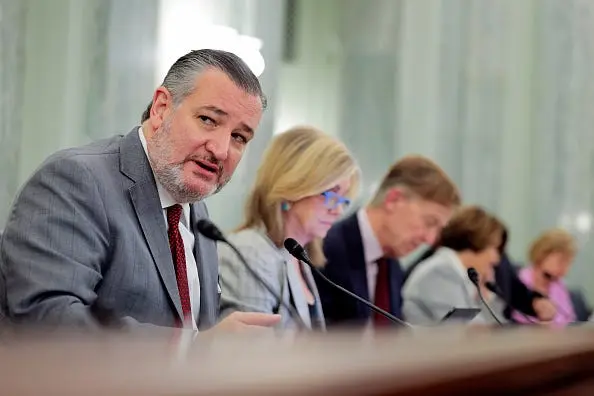
“Prediction markets have started offering, quote, event contracts on sporting events, which for all intents and purposes are sports bets.”
Those were the words out of Cruz’s mouth. Once upon a time, it felt like Democrats were more skeptical of prediction markets. But it’s starting to feel like it’s becoming a bipartisan thing here. Cruz doesn’t speak for all Republicans, but like we said earlier, he carries more weight than most.
The rise of prediction markets mostly mirrors Trump’s second term. Volume on the top platforms has exploded, starting with the 2024 election to sports “contracts” to recent global conflicts (Venezuela and Iran strikes). The latter two have unleashed insiders — who knew Trump’s international plans before the public — and made loads off it form prediction markets.
Heck, one of Trump’s sons, is an “adviser” to Polymarket. So if there was going to be some support, you’d think it come from Republicans like Cruz who are closely linked with the Trumps.
Wrong.
Another Republican Sen, Marsha Blackburn out of Tennessee, said a similar thing during the hearing:
“The introduction of sports event contracts on prediction markets has exposed more people to sports betting. While prediction markets represent financial innovation across many sectors, there are real concerns that they function much like traditional sports betting without the enforcement of state regulators and attorneys general.”
This is the argument most critics say. We’re up to more than a dozen states that’ve either taken legal or criminal action against prediction markets for, what they say, is overstepping the state’s sports betting laws. Some states don’t offer any sports betting, some keep it reserved to in-person sportsbooks, and prediction markets get to sidestep all that because of some technicality of being “event contracts.”
The “Gotcha Moment” of The Hearing
It’s not just that prediction markets can be accessed in all 50 states and freely offer markets that mirror what you’d get on NBA betting or other sports. That’s their federal right (for now). But they can also advertise with no restrictions — unlike regular sportsbooks.
Which brought us to this moment in the hearing. Senator John Hickenlooper, a Democrat from Colorado, brought up a Kalshi ad he saw on TikTok. In it, the paid influencer said she was struggling to make rent, but made up for it with her Kalshi winnings.
Apps like DraftKings or FanDuel can’t advertise like that — not without incurring a stiff fine and or worse, their license being suspended. But Kalshi can, and that concerned Hickenlooper, who brought it up with panelist McHenry, who serves as senior advisor of the Coalition for Prediction Markets.
McHenry said he wasn’t aware of the video. Hickenlooper chimed back that he’s aware now, and if that’s ok to him.
McHenry sidestepped the question before saying, ““wouldn’t condone anyone using TikTok, but that’s a separate matter.”
Does McHenry know the TikTok in the US isn’t controlled by China anymore? So he can’t use the “China is spying” argument to defend himself here.
Anywho, we just thought that moment was funny and encapsulated where opinion is trending for prediction markets: deep suspicion. That was our big takeaway from this whole discussion. Prediction markets aren’t winning much favor anymore…
 Online betting sites