 by
by

Outside the governor, there might not be a bigger, more important figure in Texas politics than Dan Patrick, who serves as lieutenant governor of the state. That means he’s the right-hand man of the governor AND leads the heavily Republican Senate.
If Patrick really doesn’t like a policy, it won’t get passed. His influence is that big — just ask the top sports betting apps.
For years, they’ve lobbied to get sports betting in Texas. Donations to politicians. Probably back-door deals. But no cigar. Texas is one of 11 states still without legal sports betting, and it’s largely Patrick’s doing. He’s repeatedly voiced displeasure with the industry and stalled any bills they’ve made it to the Senate.
But that was then and this is now: Patrick appears to have a new enemy in his sights — prediction markets. Until recently, Patrick has been mostly mum on the issue. But he’s now going public with his inklings and it’s probably not good for platforms like Kalshi and Polymarket. Keep on reading and we’ll explain why.
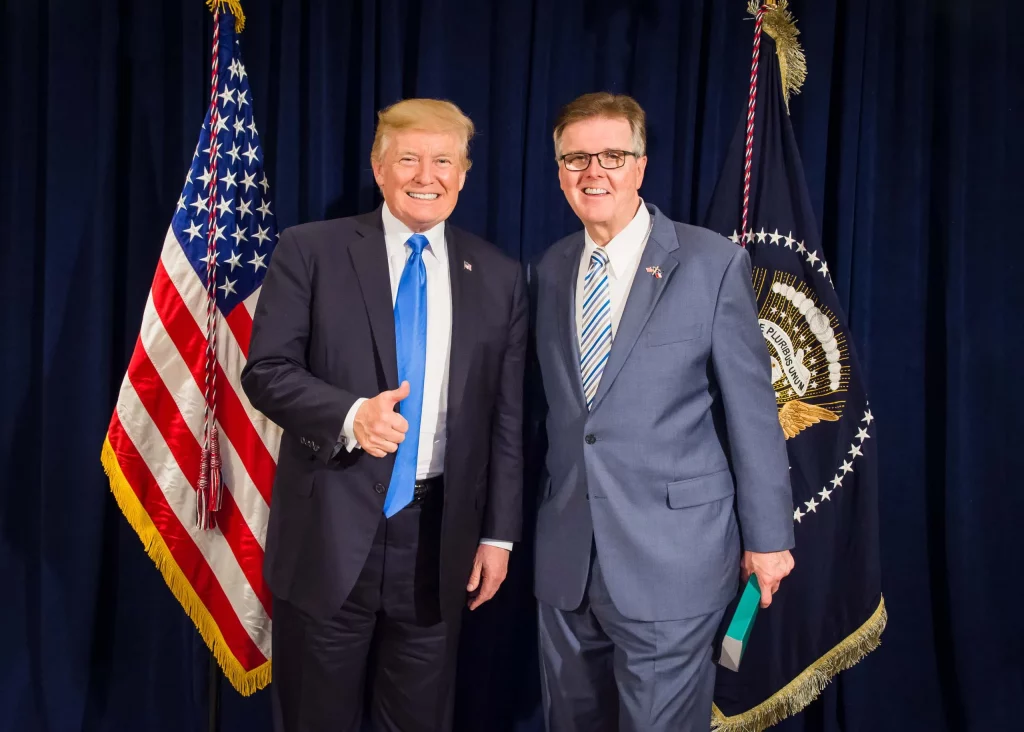
Patrick Asks For Study On Prediction Markets
As you may or may not know, the Senate is broken into committees. One of them is called the State Affairs Committee. Patrick just went public for an ask out of that committee. Here’s the direct quote:
“Study the sudden inundation of prediction market gambling and exploitation of federal law to circumvent Texas gambling prohibitions by allowing users to place bets on the outcome of elections and other events,” the directive says. “Examine the relationship between federally regulated derivative markets and state-prohibited gambling.”
Bombshell — that’s what it is. Given Patrick’s dislike of sports betting, we probably could’ve guessed this was going to happen eventually. But it’s finally official, and it comes at an opportune time.
You see, Texas only meets once every two years to discuss new legislation. This is contrary to most states, which meet yearly. Texas legislative sessions are always in odd years, so the next one will be in 2027.
With this ask, Patrick wants preliminary studies done on prediction markets. We can only assume that’s to go after them with a vengeance in 2027 when they reconvene. If all goes well, we’d fully expect them to kick around a bill to prohibit prediction markets in state. If they do, they’d align with a slew of states doing the same.
Other States Are Already Ahead of Texas
If anything, Texas is behind the eight ball on this issue. For about a year straight, states have lined up to outlaw prediction markets. By our count, there are about 15 different states that have already done so. The common thread between all of them? They don’t buy that prediction markets are “event contracts.” Instead, they argue it’s sports betting in a fancy new wrapper.
So far, these lawsuits have been mixed. Most notably, New Jersey tried to block Kalshi and lost at the federal appeals level. Nevada tried to do the same, and it’s currently waiting for a California court to rule on the case — arguments were already made.
Massachusetts has its own case against Kalshi, too. And this one’s a huge collective effort. A bipartisan group of 38 attorneys general filed in support of Massachusetts, saying states should still have the power to enforce their gambling laws instead of letting a federal agency bulldoze them (the CFTC currently governs prediction markets).
Wisconsin has also jumped in, suing Kalshi, Coinbase, Polymarket, Robinhood, and Crypto dot com over prediction markets it says function as unlicensed gambling. The federal government then turned around and sued Wisconsin, arguing the CFTC has exclusive authority over those markets and that’s that.
See how messy this is getting? It’s becoming a federal vs. state issue, so much so that it might end up in the hands of the Supreme Court when it’s all said and done.
That’s an interesting backdrop in case Texas decides to act in 2027. As much as Patrick and company would like, they might not have the power to truly govern prediction markets. If the federal government continues to insist it’s not a state right, then no state will have a winning case.
Insider Trading Remains A Concern
Did you notice Patrick not only brought up the issue of illegal betting with prediction markets, but also “allowing users to place bets on the outcome of elections and other events.” We think that line tells you what Patrick is worried about, and it’s insider trading on politics.
This has become a growing concern nationally. US-led military actions in Venezuela and Iran both unleashed insider trading to the tune of huge profits for a few freshly-made accounts. One man — military personnel, no less — was arrested for insider trading on Venezuela’s attack and the capture of Nicolas Maduro.
Heck, even in Texas, Kalshi just suspended a congressman, Zeke Enriquez, for betting on his own election. Now Enriquez lost the election (and his “event contract”), but more than anything, it was a sign that Kalshi is trying to take insider trading more seriously after all this backlash.
All this is likely weighing on Patrick’s mind, hence his very public ask. A lot can happen from now until Texas new legislative session in eight months, but it looks like prediction markets have another hostile enemy in the state of Texas…
 Online betting sites