 by
by
It hasn’t even been a full four years since legal sports betting was on the ballot in California. That was in November 2022, and the wounds are still fresh for everyone involved.
If you remember, there was not one, but two different California sports betting bills. Both failed miserably.
First, there was Prop 27. This was a push by the top sports betting apps like DraftKings and FanDuel to legalize things. California voters overwhelmingly denied Prop 27 by an 82–18 margin.
There was also Prop 26, which would’ve given local Native American tribes the exclusive right to offer legal sports betting. More than anything, the tribes pushed this bill to stop Prop 27. Voters struck this other proposal down 67-33.
Not only were those defeats costly, but it was just a really bad look. The commercial apps and tribes were openly bickering. Voters were embarrassed of both. Just all in all, a no-win scenario for everyone involved.
But… the tribes seem to think enough time has passed to give it another go. That’s right, talks are heating up that they’re planning to try to legalize again, this time in 2028. Keep reading and we’ll tell you the latest details we’re hearing out of the Golden State.
Two Years To Get Ducks In A Row
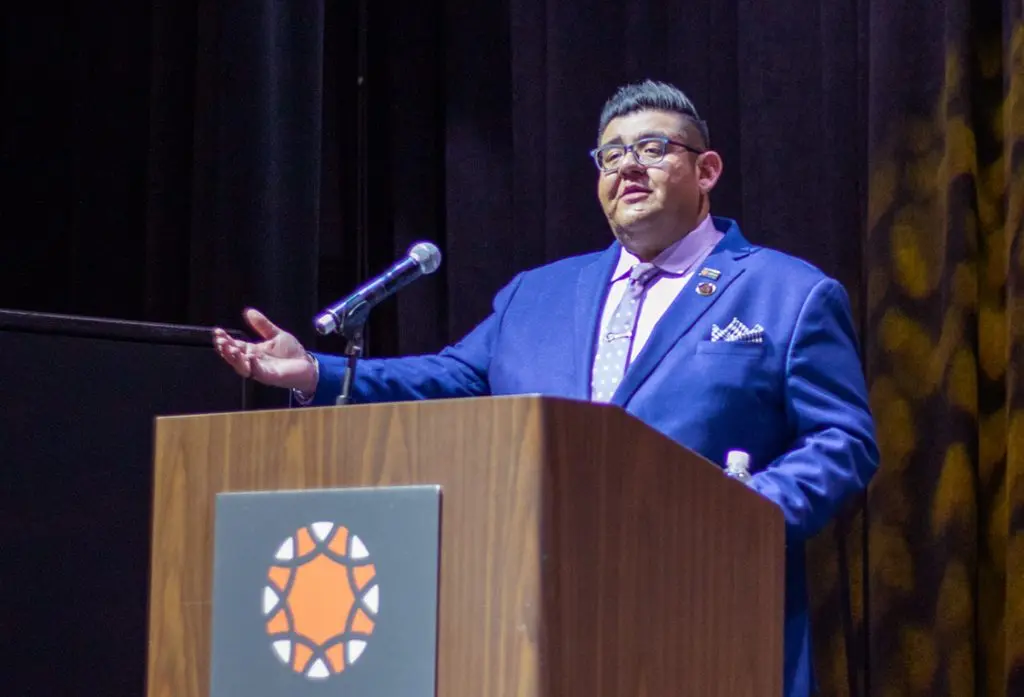
This isn’t a rumor anymore. Talks of legalization are coming from one of the most important voices in California betting: James Siva, the chair of the California Nations Indian Gaming Association. At the start of April, Silva said 2028 is the goal to get sports betting back on the ballot.
“We’re still walking the path and doing the work,” Siva said, per CDC Gaming. “We’ve been working behind closed doors, a lot of tribal meetings with ideas and concepts. It has taken us a lot of time to get here, and now tribes are more comfortable talking about in it in public.”
Why 2028 and not 2026, you ask? It’s a two-pronged approach. One, just to have enough time to put together a strong campaign. As the 2022 votes showed, Californians are not completely on board with this sports betting thing. No, they’ll need to be convinced with the right message.
But two, it allows for more time to let the 2022 failures be forgotten in the public consciousness. If all goes to plan, that would put six full years between the disaster of 2022 and the next real attempt to legalize California sports betting. More than half a decade is better than four years.
The tribe’s plan, at least for now, would include both in-person and online sports betting in this 2028 push. That’s a big shift from Prop 26, which strictly focused on retail betting at tribal casinos. The tribes know the
obvious: online betting is where the real money is. Across the country, in states where both types of betting are legal, mobile gets 95 percent of the volume compared to retail.
No word yet on whether California wants to copy Florida’s hub-and-spoke model. This allows online bets to be routed through tribal servers, which allows bettors to wager from anywhere and everywhere — not just when they’re on tribal land. This works in Florida because all betting runs through one tribe, the Seminoles. California has dozens of tribes, so agreeing to this system is a little trickier.
Prediction Markets Sped Up Legalization Timeline
There’s one other reason why California tribes are essentially in hurry-up offense model: the sudden rise of prediction markets.
That’s the part that makes 2028 feel different from 2022. Back then, the fight was mostly tribes vs. DraftKings and FanDuel. Now, the tribes are watching Kalshi, Polymarket, DraftKings Predictions, FanDuel Predicts, and others offer sports-related markets in California without a California sports betting license. You can imagine they think they’re siphoning money away from them, which they kinda are.
Siva said the revenue loss from these platforms could be “significant,” and CNIGA plans to study just how much money is being pulled away, and in their eyes, illegally so. A compact with the government gives tribes the sole right to offer betting. Sure, prediction markets say they’re “event contracts”, but to the naked eye, it’s just glorified sports gambling.
Not that the tribes aren’t trying to step them already, though. Several California tribes are suing Kalshi, though a California court denied their request for an injunction in November 2025. That was a setback, but it didn’t end the fight. If anything, it probably reinforced the need for a more permanent solution.
Why 2028 Could Be Different For The Tribes
Let’s be optimists for this hypothetical run in 2028: the tribes have a better chance than they did in 2022. For one, there should be no circus — two competing bills, smear-campaign ads, and so on — this time around.
Two, the tribes might have a unified proposal this time. If the dozens of local tribes come forward with one unified proposal, include online betting, and explain why the market should stay tribal-controlled, the pitch gets much simpler to California voters.
The other difference is that betting is happening in the state on a grander scale now. Prediction markets, offshore sportsbooks, and DFS products have all filled the void. That gives tribes a stronger argument than they had in 2022: legalize it through us, or keep letting outside platforms take California money without benefiting Californians. That sounds like a strong pitch to us!
 Online betting sites