 by
by
Who will win the California governor’s election? Will the one-time billionaire tax pass in California? Will Tesla have robotaxis roaming in California by the end of June 2026?
These are all markets currently available at top prediction markets like Kalshi and Polymarket. And if new data is to be believed, these markets are exploding in popularity among California residents, more than in other states.
There’s new data out that shows states without legal sports betting — namely, California and Texas — are responsible for most of the volume on prediction markets. Maybe that’s a surprise to some, but it’s probably not to most. Let’s dig into the data here and some possible ramifications, too.
Where Prediction Market Volume Is Coming From
Eilers & Krejcik Gaming is the gold standard for analysis and data about the gambling industry. Technically speaking, prediction markets are not a part of the industry. They are instead a “derivatives” platform that offer “event contacts” — not bets. That’s the legal argument. But even then, you’d have to be naive to believe there’s not a huge overlap between users on sports betting apps and prediction makers.
That’s what Eilers & Krejcik wanted to find out — who’s putting money on event contracts, and is that money being siphoned away from traditional betting apps. The answer is a resounding yes. A brand new report from Eilers & Krejcik says that 69 percent of volume on sports contracts comes from states without legalized online sports betting. The analysis discounted volume on non-sports contracts, such as politics or world events.
We do want to state the obvious, though: the high population sizes of California and Texas do skew the data toward them. Just under 40 million people live in California, while 31 million or so call Texas home. That’s multiples more of smaller states like Nevada (3 million) or Nebraska (2 million) so naturally, big volume will come from that hoard of people.
Still, the data clearly shows that Californians want to do betting-like activity, whether it’s on prediction markets or offshore sportsbooks (where data is not as public). So if locals are already betting, then why not just legalize it and get some tax benefits out of it? That’s likely the argument being made in California, and it could just lead to legalization, as we explain next.
Local Tribes Could Lead The Way To Legalization
California tribes, which there are dozens of in the Golden State, might be gearing up for another run at legalization. Yes, they failed at it in 2022, but a lot has changed since then,
Back in 2022, voters overwhelmingly rejected two California sports betting ballot initiatives. Prop 27, backed by DraftKings, FanDuel, and the commercial sportsbook crowd, got crushed by an 82–18 margin. Prop 26, backed by the tribes, didn’t do much better, losing 67–33. Not only did the initiative lose, but millions of dollars were wasted on advertising, and worse, it was just reputational damage for all involved.
But what’s the saying — time heals all? That’s what leadership of the California Nations Indian Gaming Association seems to believe. They’ve been open about trying to get a 2028 ballot initiative on the issue.
And this is where the rise of prediction markets matters. Thanks to them, the tribes now have a much stronger argument than they did in 2022. Back then, they were mostly warning about commercial sportsbooks invading California. Now, Kalshi, Polymarket, DraftKings Predictions, FanDuel Predicts, and others are already offering sports-style markets in the state, and with great success if Eilers & Krejcik is correct.
So the pitch becomes essentially this: betting is already happening in mass, but California isn’t controlling it. Outside parties are reaping all the benefits. Why not allow the tribes to control it, and keep the money in-state? Sounds like a pretty strong pitch to us, don’t you think?
California Is Growing Weary Of Prediction Markets Already
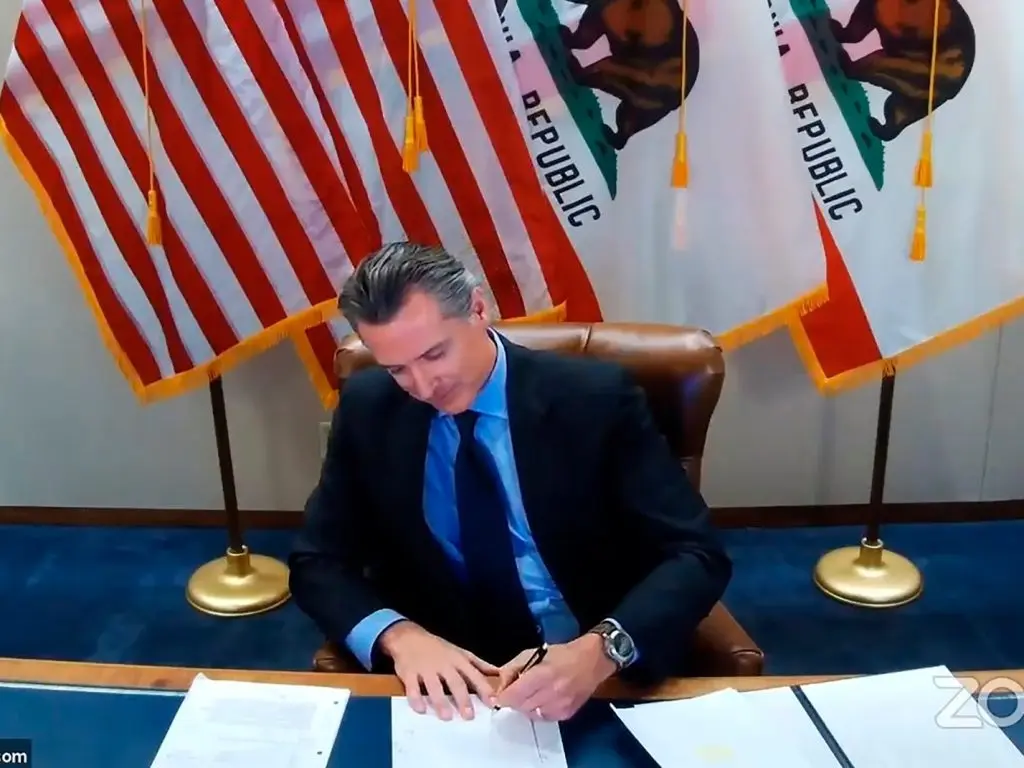
Helping the tribes’ case here is that California is already taking action against prediction markets. At the end of March, Governor Gavin Newsom signed an executive order banning state officials with insider information from using prediction markets for personal gain.
This is a growing concern, not just in the Golden State, but countrywide. Insiders are believed to have profited big time from information about striking Venezuela and Iran. A military officer was even arrested for their insider trades on Venezuela, all made on a prediction market.
Now, California hasn’t tried to ban prediction markets completely. That’s a tad surprising because so many other states have tried to do so (our country is at over a dozen with proposed bans or lawsuits in place). Heck, a California court is even deciding on a case involving the state of Nevada trying to ban them from its borders.
If California does ever take similiar actions, you’d think the native tribes would cheer at it. It would just strengthen its case for 2028. So who knows, the sheer popularity of prediction markets in California may have, weirdly, helped get sports betting legalization off the ground. Time will tell.
 Online betting sites