 by
by
Often when we discuss prediction markets disrupting the legal sports betting industry, all the talk goes toward sports betting apps. And it’s true, the likes of FanDuel and DraftKings have been disrupted — just look at the companies stock prices.
But… we often overlook Native American tribes. In multiple states across the country, tribes have the sole right to offer Las Vegas-style betting ,and they sure don’t want prediction markets sidestepping those rights.
That’s why we weren’t surprised in the slightest to see the Indian Gaming Association telling Congress to put a stop to prediction markets. But they didn’t do so alone. Keep on reading, and we’ll tell you who they joined forces with to put the pressure on the likes of Kalshi and Polymarket.
“Avengers” Group Rallies Against Prediction Markets
Like we said, the IGA didn’t come alone to this fight. No, they brought a mini-Avengers group to combat prediction markets.
Get this, they teamed up with the American Gaming Association, the Association of Gaming Equipment Manufacturers, the North American Gaming Regulators Association, the National Thoroughbred Racing Association, The Jockey Club, and dozens of tribal, labor, and state-level gaming groups. If that ain’t a murders row of influential groups, then we don’t know who are.
All together, they sent a letter to the U.S. Senate asking lawmakers to crack down on sports event contracts offered by prediction markets. More specifically, they want Congress to use upcoming cryptocurrency legislation (Digital Market Clarity Act) to make it crystal clear that sports betting belongs under state gaming regulators — not the Commodity Futures Trading Commission as is the case currently.
The letter states their position quite clearly:
“By offering nationwide sports betting through so-called ‘sports event contracts’ and branding it as a federally regulated financial product, these platforms have bypassed state and tribal law, weakened consumer protections, and undercut a system built on local control – one that supports jobs, generates tax revenue, and funds community priorities.”
Haymaker, anyone? But hey, we’ve heard that message before from individual states that’ve sued Kalshi. What makes this effort interesting is the size of the coalition banding together.
For the better part of a year, prediction markets have mostly been battling individual states in courtrooms. But now the opposition is becoming much more organized and using a “strength in numbers” approach essentially.
They’re asking members of Congress to consider the FCTC’s role in governing this. The letter also features this dinger:
“Litigation may eventually clarify the law, but this is ultimately a question of congressional intent. Congress should not wait while this nationwide expansion of gambling continues. It should use crypto legislation to reaffirm a simple principle: sports betting falls outside the CFTC’s remit and cannot be offered through prediction market platforms.”
California Tribes Have A Vested Interest In This
California carries extra weight among the Indian groups. That’s because there are dozens of them in the Golden State, and they control a very, very lucrative market (California has a higher GDP than all but four countries).
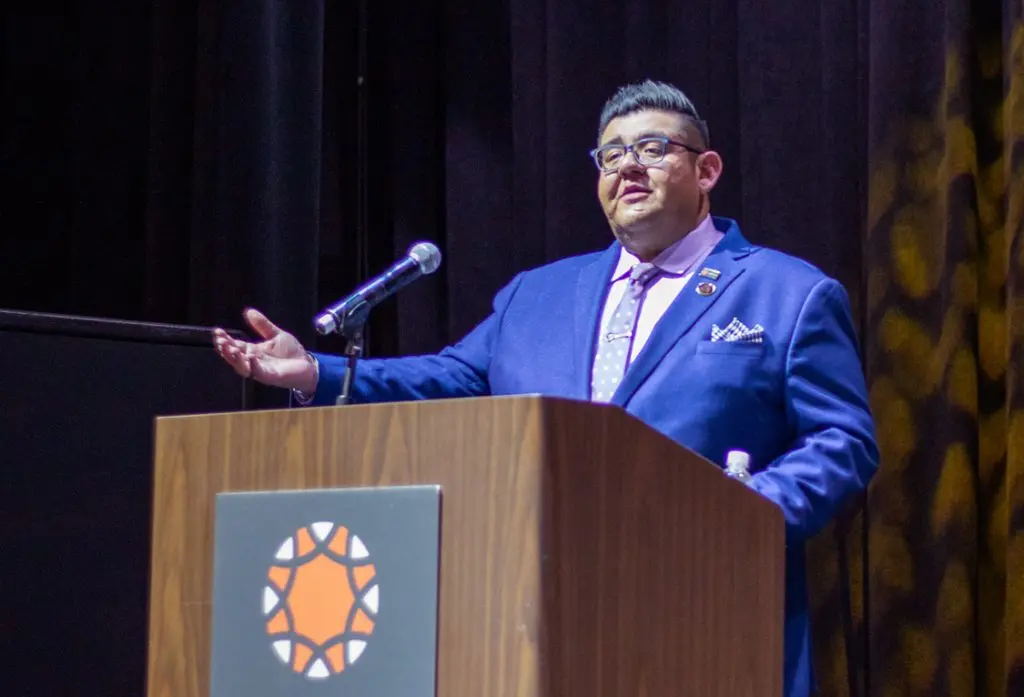
James Siva, chairman of the California Nations Indian Gaming Association, has become the voice of anti-prediction markets among these tribes. Back in February, Siva told a gathering of more than 600 tribal leaders and gaming regulators that prediction markets represent “the largest existential crisis our industry has ever faced.”
And honestly, it’s not hyperbole. According to the National Indian Gaming Commission, tribal gaming revenue reached nearly $44 billion during fiscal year 2024. That’s not just casino profit either. That money funds tribal governments, infrastructure projects, healthcare programs, education initiatives, and so on. In many tribal communities, gaming revenue is the financial engine that makes self-governance possible.
From the tribal perspective, that’s what makes prediction markets different from the usual gambling competition. California tribes have battled over online sports betting proposals in the past. Most famously, they helped get a 2022 vote turned down.
Yet throughout all of those debates, there was at least an understanding that California sports betting would eventually become a thing (rumors are that 2028 will be a new attempt to legalize from the Cali tribes). The argument was just over who got to control it.
Then prediction markets showed up and bypassed everything. As Siva has put it in the past, California spent seven years debating online sports betting only to suddenly wake up and discover what he views as online sports betting already being offered statewide through prediction markets. That’s why tribes, like other critics, keep returning to the same argument: they don’t view sports event contracts as a financial product that belongs under FCTC control. They view them as sports gambling in a fancy financial wrapper.
That’s why California tribes have already taken legal action before this Avengers team-up. Dozens of federally recognized tribes have filed legal briefs in other states arguing that these platforms are undermining tribal gaming agreements, too.
The courts haven’t decided this, which explains the reasoning behind the letter. The Indians and other groups want Congress to take control since the feds and courts are dragging their feet on the issue. Politicians aren’t known for acting quickly, but perhaps the combined influence of these groups will get them to act soon cause many of their livelihoods depend on it.
 Online betting sites