 by
by
In a roundabout way, the state of Ohio had a hand in the NBA scandal that’s rocked the league and legal betting industry as a whole.
No, it didn’t have a coach indicted the way Portland’s Chauncey Billups was. It didn’t have a player involved, either as Terry Rozier of the Heat was. But…. there was a Cavaliers connection.
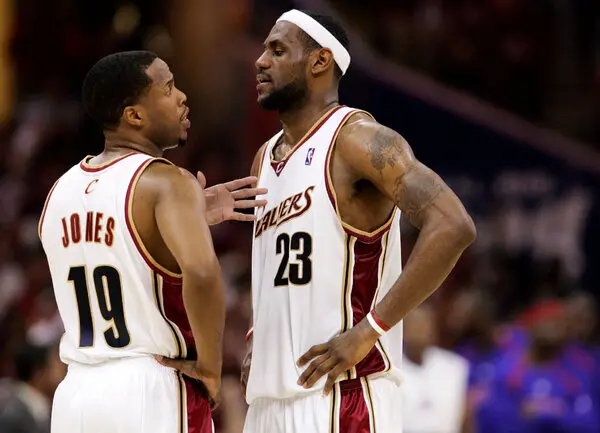
We’re talking about Damon Jones, who was arrested by the FBI in the probe. Cleveland hoops fans will remember Jones, a longtime NBA guard who was on the team during LeBron James’ first stint with the franchise. The two became buddy-buddy, so much so that Jones became an assistant coach with the Cavs (during James’s second run with the team) and Lakers (when LeBron jumped over).
Welp, Jones is being accused of selling inside information to bettors. The FBI says Jones tipped bettors off that James was going to sit out a game due to injury — before that info was public. This situation has forced the NBA’s hand.
Just this week, before December ends, the league sent a memo to all 30 teams outlining new rules designed to slow the spread of nonpublic injury and availability information. It’s a reaction to the recent scandals, which threatened the “integrity” of the game. Keep on reading and we’ll tell you how NBA betting will be affected going forward.
What The League Is Changing
Under the new guidance, teams must submit a game-day injury report between 11 am and 1 p.m. local time. From there, any change in a player’s status must be reflected on NBA.com every 15 minutes. Previously, teams updated injury reports on an hourly basis.
That might sound minor, but in betting markets, minutes can make all the difference. An even few seconds head start allows sharp bettors to hammer unders, alt lines, and niche prop markets before top betting apps can adjust.
Of course, Jones isn’t the only one caught in the crosshairs here. Rozier is also being accused of tipping bettors. The difference? Rozier is actually an active player, and the FBI says he faked an injury mid-game to help bettors win an under bet on his stats. It’s the same exact thing that ex-Raptors player Jontay Porter did (who is the brother of Michael Porter Jr.). He’s already been banned for life, a fate that could await Rozier if he’s found guilty.
Billups’ accusations are more in line with Jones, though. The Trail Blazers coach supposedly tipped bettors off about not just injuries to his players, but outright resting them so the team could “tank” games and improve NBA Draft positioning.
Obviously, the NBA is worried, and they HAD to make a move. No other league — not even collegiate athletics — has been hit with this many betting scandals. But here’s the thing: the hits might not stop coming for the association, as we get into in the next section.
Congress Is Getting Involved Too
Following the FBI indictments, bipartisan leaders of the US House Energy and Commerce Committee requested a briefing with NBA Commissioner Adam Silver. That’s not a small thing, and at the very least, a black eye to the league’s public relations. In calling for a briefing, the politicians are essentially saying Silver and the NBA aren’t equipped to protect the integrity of their games.
They might have a point, too. Before the FBI blew the lid off on the scandal, the NBA did its own investigation into Rozier. They didn’t “clear” him, but at the same time, the investigation found no wrongdoing. In hindsight, the NBA look like fools ruling that.
This failure might explain this next data point. A recent Washington Post–University of Maryland poll found that 66 percent of Americans are concerned that expanded sports betting increases the risk of games being fixed or rigged. We’re no league executives, but that number seems uncomfortably high.
Prop Bets Are The Next Target
The NBA, to their credit, is thinking about bigger changes than just the way teams report injuries. The memo also signals that the NBA wants sportsbooks to rethink what kinds of bets are offered on its games. Among the ideas the league plans to push:
- Lower limits on player prop bets
- Restrictions or outright bans on “under” bets (we have no clue how that’ll work out)
- Fewer players offered in prop markets
- Eliminating bets decided by a single play
The league’s position is straightforward. If a bet can be manipulated by one substitution, one late scratch, one coaching decision, or one player just faking an injury, it presents too much integrity risk.
Sportsbooks, though, have already made concessions. After Porter’s lifetime ban, major bookies stopped offering props on players signed to two-way contracts or 10-day deals, citing heightened risk around fringe roster players. But as we saw with Rozier — a 10-year bet that’s made over $100 million in lifetime salary — even established players are at risk.
So look, we applaud what the NBA is doing. They’re certainly not sitting back and hoping this gambling scandal rolls over. But at the same time, there are just risks that can’t be avoided — not when there’s the potential to make big money on inside info.
 Online betting sites