 by
by
We’re blue in the face repeating this, but we’ll say it once more: of the 11 states without a legal sports betting market, Oklahoma is the most surprising.
Surprising because Oklahoma sports betting is a natural fit. Here you have a state that bleeds sports, namely the Sooners. Here you have a state with an existing casino betting market, one that’s been around for decades now.
Yet, the Sooner State has held out of legalizing sports gambling. Not because there’s not a desire for it — among the government and residents alike — but because the key stakeholders just can’t get along. The governor and Native American tribes have and remain at odds with each other.
But… there’s another attempt being made to allow residents in-state to bet on sports, just not in the way you’re probably thinking. Keep on reading and we’ll explain the latest, surprising sports betting talk inside the Sooner State.
Betting For Charity? It’s Possible
It’s a new year, and there’s always optimism for creating new rules. And optimism is high for Oklahoma state senator Michael Bergstrom, who dropped a new sports betting idea into the mix with SB 2081. This is NOT a sweeping sports-betting legislation, it’s a lot smaller than that — but that might just give it a fighting chance.
Instead of opening the floodgates to statewide mobile betting apps and casino sportsbooks, Bergstrom’s bill goes narrow. Way narrower, in fact. It would let charitable groups and private event organizers run limited wagering at approved events — as long as they follow rules set by the state. It would be tightly controlled, of course, not a free-fall.
The proposal sketches out who would qualify to host these betting events and how they’d be allowed to operate, while keeping strict boundaries on who can participate and what kinds of wagers would even be permitted.
The proposal outlines some of those rules already: “no private wagering event authorized by this section shall be conducted, advertised or promoted by a commercial or retail business, alcoholic beverage or marijuana retail store, manufacturer or distributor, gambling business, bookmaker, casino, governmental entity or on-line by use of the internet.”
Moreover, therewould be a cap on winnings — no mega-millionaires, that’s for sure. Max winnings would be $1,000 (not a dollar more) with $100 the max bet per event. Fair, we would say. There’s always a chance to circumvent the rules — pretend an event is a charity when it really isn’t — but this cap certainly would stop some scammers in their tracks.
Will The New Proposal Pass?
Our first gut instinct was to say, no, it won’t pass. It just seems too minuscule a rule for anyone to care about it.
But then again, that might just be its secret weapon. The proposal largely sidesteps the stakeholders who’ve prevented betting from entering the state in the first place.
Simply out, Governor Kevin Stitt and the tribes hate each other’s guts. Stitt wanted to bring sports betting to the state, but without the tribes having a monopoly over it. He envisioned commercial betting apps like BetMGM or DraftKings being able to operate freely.
The tribes saw things differently. They have a legal compact with the state that allows them — and only them — to offer Vegas-style betting inside the state. Of course, they believe sports wagering falls into that, just like casino, which they already offer.
Neither side has hidden their disdain for one another. The tribes have outright said they’re waiting for Stitt’s term to end later this year to join the negotiating table for legalizing it. At this point. Stitt has under 10 months left in office.
Not The First Unique Idea
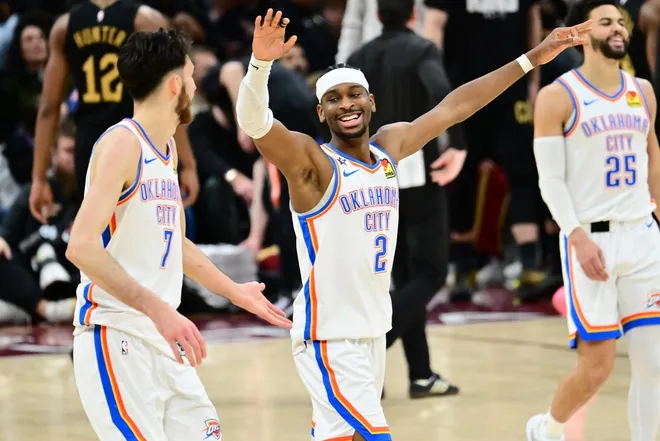
Again, we like the uniqueness of the charity idea. It reminds us of another eyebrow-raising proposal in 2025.
This one didn’t come from lawmakers at all. It came from the reigning NBA champions, the Oklahoma City Thunder.
The dynasty-in-the-making team floated a revenue-sharing concept that would rope tribes directly into any future sports betting rollout, with licensing structured around tribal partnerships rather than cutting them out. Thunder executive Will Syring framed it as a way for the franchise to help usher in a regulated Oklahoma market while still routing real money back to tribal nations.
The blueprint was ambitious. Either the Thunder or a coalition of tribes would control a single statewide retail-and-mobile license and then plug in a heavyweight operator like DraftKings or FanDuel to actually run the book. In return, the Thunder would skim 0.25% of total betting handle, while tribes would split broader wagering revenue.
But that idea was enough to trigger the Oklahoma Indian Gaming Association. True to form, they warned that any license issued outside direct tribal control could blow up the State-Tribal Gaming Act and the compacts that currently govern gambling in Oklahoma. Those agreements collectively delivered more than $210 million to the state last year alone, so they aren’t something to disregard and overstep.
That’s the state of Oklahoma betting talks. Some off-the-wall ideas, but ultimately, still a lot of resentment from the top voices on the issue. That’s not likely to change until at least 2027, when Stitt is long gone from his governor role.
 Online betting sites