 by
by
Oklahoma remains a prominent voice in the legal betting industry. This is despite there being no sports betting in Oklahoma.
But you know what Oklahoma does have? Casinos, run by the local tribes. And there’s a lot of them, ever since the 1990s. This has made the state someone to listen to when it comes to the state of the industry.
That’s why it should come as no surprise that an Oklahoman represented the industry during a recent congressional hearing about prediction markets. And we don’t know if you’ve heard, but this whole prediction market thing is THE story in the industry, all across the country. Keep reading, and we’ll tell you what came out of this new hearing in Washington DC.
Oklahoma Tribal Leader Takes Center Stage
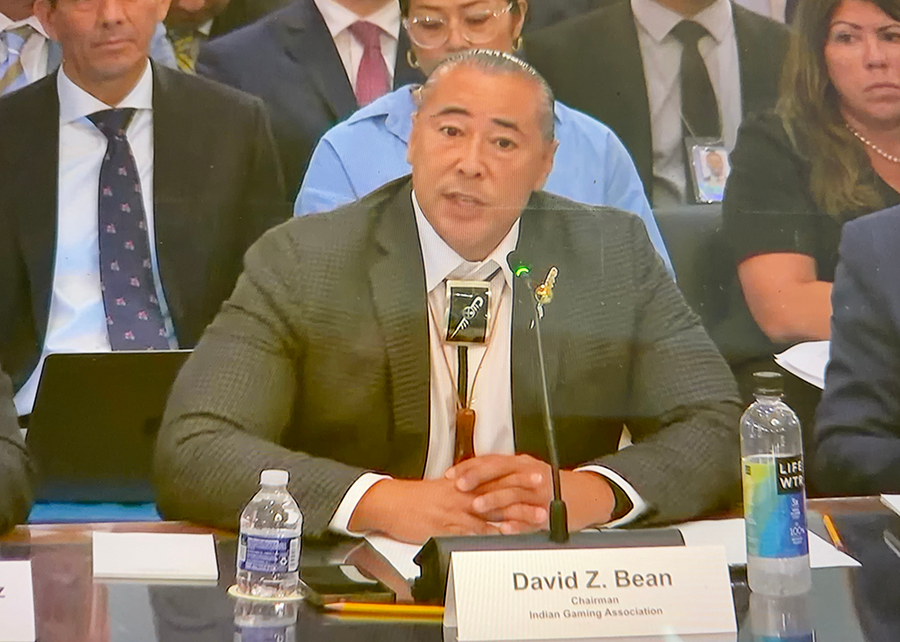
The Oklahoman voice belonged to one David Bean, Chairman of the Indian Gaming Association. Bean represents tribal gaming interests across the country, but he also serves as Chairman of the Puyallup Tribe and has been deeply involved in the fight over what prediction markets are doing on tribal lands. Let’s just say that Bean did not mince words during the hearing.
“No one voted for this,” Bean said of “sports contracts” expanding across prediction markets. “Congress has not passed any new laws on this matter. This has happened because one person has declared online sports gambling is legal in every state and on every reservation.”
That was a good quote, but here’s the real doozy of the whole meeting:
“One man has taken the CFTC from crops to props,” Bean said.
Kudos to Bean for the rhyme, but it’s also deadly accurate, too. The Commodity Futures Trading Commission (CFTC) was created to oversee derivatives and commodity markets. Think oil, wheat, gold, and other assets used by businesses to hedge real financial risk. But somehow, they are now overseeing prediction markets.
Giving them that regulatory power has drawn the ire of top sports betting apps, state attorney generals, and really, everyone. The CFTC remained a central part of the hearing, as well cover next:
Congress Hears Two Completely Different Stories
Bean was not alone to speak in the hearing. There were four other witness called to talk, including:
- American Gaming Association Senior VP of Government Relations Chris Cylke
- Katten Muchin Rosenman Partner Carl Kennedy focuses on U.S. derivatives laws
- Morgan, Lewis & Bockius Partner Robert Schwartzpreviously served as the general counsel for the Commodity Futures Trading Commission
- Solidus Labs CEO Asaf Meir co-founded the AI-powered risk monitoring company
The five-person panel was evenly split between those who believe the CFTC should have the full authority to regulate these products and those who see sports contracts as a backdoor version of online sports betting.
Two attorneys, Kennedy and Schwartz, argued that the Commodity Exchange Act gives the agency enough power to oversee prediction markets and let the industry continue innovating. Solidus Labs CEO Meir largely agreed, although he acknowledged sports contracts require a different type of surveillance to prevent manipulation and insider activity.
Bean and American Gaming Association executive Cylke took the opposite position. Their argument is that legal sportsbooks already operate under strict state rules covering age limits, responsible gambling, taxes, licensing, and market integrity. Prediction markets can offer almost identical products without any of the extra baggage that sportsbooks have to shoulder.
That issue hits especially close to home in Oklahoma. The state’s tribes have negotiated gaming compacts and invested billions into their casino operations. Yet prediction markets can now reach users across Oklahoma without negotiating a compact, paying the same taxes, or asking voters and lawmakers for permission.
You can see why tribes (not just in Oklahoma, but countrywide) are so fired up about this, right? From their perspective, this is not some harmless financial innovation. It’s an existential threat to the business model that funds many of their tribal communities.
Congress Knows It Cannot Stay Quiet Forever
The biggest takeaway from the hearing is that Congress appears ready to involve itself. Rep. Dusty Johnson, who chairs the House subcommittee, said lawmakers have an “obligation” to figure out whether sports contracts are financial instruments or unregulated gambling. His full quote was:
“Courts are acting in this space, the commission is acting in this space. I do not believe the committee, that Congress, should be silent.”
He also confirmed this will NOT be the last hearing on prediction markets. Up until now, most of the fight has happened through state lawsuits and individual CFTC decisions. Congress largely watched from the sidelines while Kalshi, Polymarket, and others siphoned money away from sportsbooks, tribes, and so on.
Johnson also said lawmakers need to determine whether the CFTC has enough tools and resources to properly oversee the industry. The agency has gone through budget and staffing cuts, and Chairman Michael Selig is currently the only member of what is supposed to be a five-person commission. Yes, seriously — hence the backlash over the CFTC being in over its head on overseeing this new industry.
Everyone at the hearing at least agreed on two things: customer protection and market integrity matter. The disagreement, though, is over who should enforce those protections and what rules prediction markets should have to follow in the first place.
No legislation came out of this hearing, and no grand solution was reached. But Congress finally seems to understand this is not going away on its own, and they’ll need to act on it sooner rather than later.
 Online betting sites