 by
by
There’s been little update on the state of Washington’s lawsuit against Kalshi, the top prediction market platform in the United States.
If you remember, the lawsuit was brought on in April by Washington Attorney General Nick Brown and the state’s Gambling Commission. Almost immediately, Robinhood — the stock-trading platform that also sells “event contracts” — counter-sued them, arguing they have the right to offer these.
Both sides are getting their ducks in a row for a further legal fight, but there’s no major update in this specific case as of yet. Elsewhere though, there has been movement, and if anything, it’s additive to Washington’s case.
First of all, more and more states have done what Washington did and brought a lawsuit forward — not just to the platforms, but the federal agency in charge of overseeing them, the Commodity Futures Trading Commission (CFTC). All the state arguments are virtually the same: prediction markets are bypassing local legal sports betting regulation and offering gambling “though a back door.”
So it’s a collective effort now. Sure, it’s a big deal when a populous, legal betting state like Washington takes legal action. However, it’s an even bigger deal when dozens of equally sized states are now doing the same thing.
But… there’s a brand-new story that gives these states more ammo. This is a true blockbuster, involving insider trading and Donald Trump’s teleprompter. Oh, boy, you’re going to want to keep reading this bombshell!
Trump’s Teleprompter Operator Allegedly Made More Than $100K On Prediction Markets
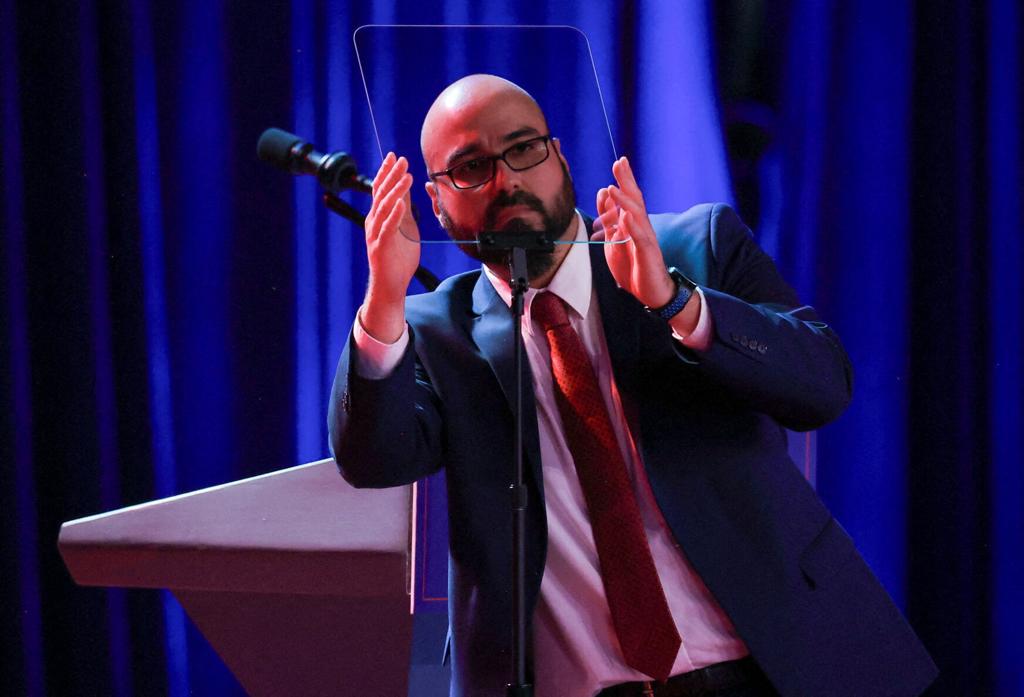
Never did we think we’d be writing a headline like the one above, but here we are. ABC News just broke the story of Gabriel Perez — Donald Trump’s longtime teleprompter operator — who is believed to have made more than $100,000 betting on the president’s speeches through Kalshi. Perez has been in the role since 2016 so he’s an “O.G.” and even has had the final look at prepared remarks before they became public.
This, of course, gives him exclusive access to information nobody else staking money on the platform could possibly know. And supposedly he leveraged that through Kalshi’s “Mentions” markets, where users bet on whether a person will say a certain word, phrase, or topic during a speech. Investigators reportedly found that Perez placed bets on more than a dozen Trump appearances over a three-month span.
Sources told ABC News that investigators discovered instances where Perez would exit certain Kalshi positions in the middle of a speech after Trump skipped over a section containing the word he had bet on. So he allegedly knew what Trump was supposed to say, watched to see whether he actually said it, and then adjusted his money accordingly.
Trump is known to go off script, by the way. Heck, the president himself once said he goes off the teleprompter roughly 80 percent of the time. So knowing Trump’s script in advance wouldn’t be enough of an edge… which makes the mid-speech transactions feel like “smoking gun” evidence, if true.
The allegations became serious enough that the White House placed Perez on unpaid administrative leave. Press Secretary Karoline Leavitt said Trump viewed the situation as a “disgrace” and personally made the decision. Womp womp womp.
Washington Just Got More Ammo In Its Kalshi Case
This does not mean Washington automatically wins its case. The state still has to convince a judge that Kalshi and Robinhood are offering illegal sports gambling rather than federally regulated financial products. But… politically and practically, the Perez story (assuming it’s proven to be true) gives Washington another strong example of why these platforms cannot be treated like harmless forecasting websites.
The story once again raises questions about insider information, customer protections, market surveillance, and enforcement — the exact issues gambling regulators are supposed to oversee. We say again because Perez is not even the first alleged insider-trading case tied to prediction markets. The Department of Justice has also accused a Special Forces soldier of betting on the capture of Venezuelan President Nicolás Maduro.
And it’s getting harder to argue that the more prediction markets expand, the more people with private information will be tempted to cash in. Athletes, coaches, political staffers, corporate employees, doctors, lawyers, and government officials can all know something before the public does. That creates an endless list of opportunities for somebody to bet with a “loaded deck” per se.
You may be thinking, “but the same risk is there with sports betting apps and their bets.” Here’s the difference: these apps have internal compliance departments and state regulators that can and usually do catch this stuff. Prediction markets have neither at the moment (the CFTC has little expertise in regulating shady behavior like this).
For now, the accusations against Perez are just that, accusations. But these details are almost too specific not to have some truth to them. Certainly, Washington prosecutors (and other states too) are hoping it’s true to give them more ammo to come after Kalshi once this case goes to court.
 Online betting sites