 by
by
South Carolina sports betting remains illegal. It’s one of 11 states without a legal sports betting market, along with the likes of Alabama, Georgia, Texas, and a few others (but mostly Southern states).
We’ve talked at length about how much the state misses out on tax revenue by not legalizing it. However, lesser known is how the two premier college sports teams in the state — the South Carolina Gamecocks and Clemson Tigers — would benefit big time from a legal marketplace.
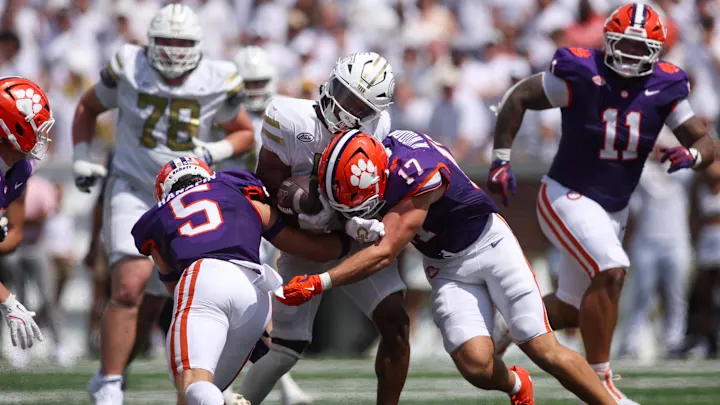
And given the state of both football programs, they could use some help. Clemson had championship hopes to start the year, but somehow has lost two games already. South Carolina lost to Vandy and has been a bottom-half SEC team for years now.
So you’re probably wondering, “what’s that have to do with betting?” For that, we need to analyze North Carolina sports betting. The neighboring state does have legal betting, and it’s modeling the way for its southern namesake. Keep reading and we’ll explain.
North Carolina’s Explosive Sports Betting Success
North Carolina entered the industry relatively late. Sports wagering wasn’t legalized and launched until early 2023 — five whole years after the landmark Supreme Court ruling. When it was finally introduced, local lawmakers figured it would take years before North Carolina hit its stride.
The state’s fiscal research division projected $6.6 billion in wagers by the 2027–28 fiscal year. But guess what? They wildly underestimated the betting appetite of North Carolinians. Remarkably, bettors smashed that mark in the first full fiscal year. From July 2024 through June 2025, more than $6.6 billion was wagered across the eight legal sportsbooks, according to the NC Lottery Commission.
Of that total, $6.4 billion came from straight-up bets, while another $222 million came through promotions. Books paid out nearly 90 percent back in winnings, with $5.9 billion going to players. Even so, the state still collected an estimated $116.4 million in taxes, thanks to the 18 percent tax on gross revenue. That’s years ahead of schedule — fiscal research expected it would take until 2027–28 to even cross the $100 million tax threshold.
Zooming out further, since statewide betting launched in March 2024, North Carolinians have wagered $8.8 billion overall, and the state has collected about $166 million in taxes. The lowest month yet was June 2025 with $433 million in wagers, which is still a decent come-up.
The takeaway? North Carolina’s market matured way faster than anyone expected, and the numbers likely aren’t slowing down. This explosive growth has trickled down into the state’s education system, too, and the sports program that system funds. Allow us to explain.
Schools Cash In On Betting Dollars
So where does that tax money go? North Carolina built out a unique distribution plan. Funds are earmarked for the athletic departments at 13 UNC System schools — everyone except UNC-Chapel Hill and NC State. The Department of Health and Human Services also get a share for gambling addiction programs, plus youth sports organizations, outdoor initiatives, and a fund designed to lure major events to the state. Whatever’s left goes into the general fund.
So far, each of those 13 schools has banked more than $2.5 million since launch. And the pot is only getting bigger. Lawmakers are already debating changes that would include UNC and NC State, though the Senate plan gives those two schools a much larger cut than the House version.
Another wrinkle? Starting this past July, up to $20.5 million is expected to be shared directly with athletes via Name, Likeness, and Image programs. Per new NCAA rules, there will now be direct revenue share with players across the country. Some like North Carolina will be using betting money to fund that.
The reality is sports betting has quickly become a cornerstone of athletic funding in North Carolina. Just one year in, schools are relying on this money to support programs and athletes. That dependency will only grow as the handle rises and the tax debates heat up.
So where does that leave a state like South Carolina that doesn’t have this pot of money to dip their hands into? Welp, unfortunately, it means they’re more and more likely to fall behind in the college sports arms race. It’s on boosters, not bettors, to pick up the tab on Clemson and Southwest Carolina’s success — and that’s a tall order.
Will South Carolina Ever Legalize?
South Carolina has had multiple bills floated in recent years to bring sports betting into the fold. Each time, they’ve stalled out in committee or failed to gain traction beyond a first hearing. The appetite among lawmakers just hasn’t been there, especially in the Senate.
The roadblock usually comes down to the same issue: strong conservative opposition in the legislature. Religious groups, along with lawmakers who see betting as a “vice,” have held firm. Kudos to them for sticking to their values, we suppose.
Bottom line, there’s no clear path forward right now. Unlike North Carolina, which seized the opportunity, South Carolina is still years behind. And until the political winds shift in Columbia, bettors in the state are stuck with workarounds — offshore books, state border crossing, or prediction markets — instead of a regulated market of their own.
 Online betting sites