 by
by
California was well represented in the 2026 March Madness tournament. On the men’s side, four teams made it — UCLA, Saint Mary’s, Santa Clara, and even little-known California Baptist.
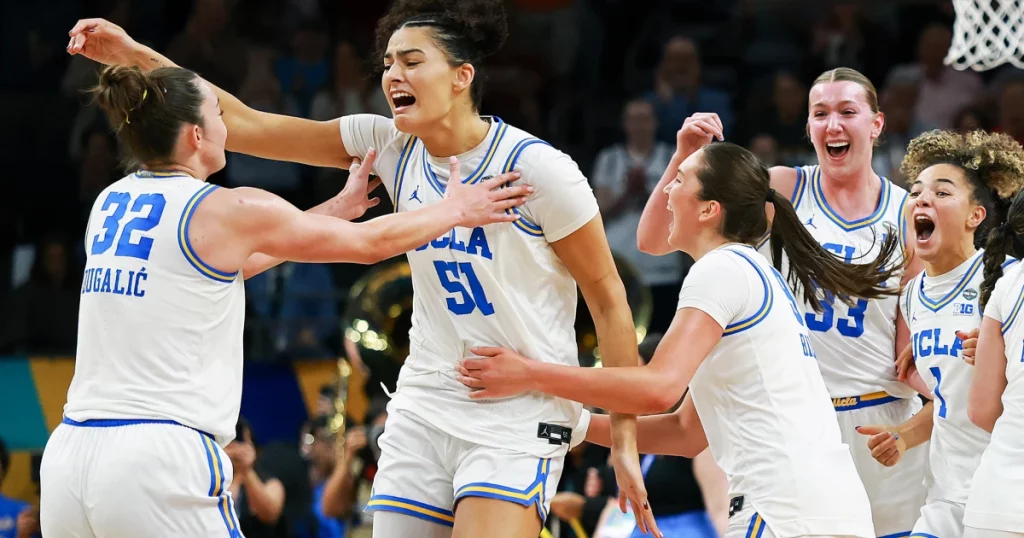
But… all of them were outdone by the UCLA women’s basketball team. Forget making the tourney, the Bruins women’s team won the whole tournament and in convincing fashion. In the final, UCLA blew out South Carolina by a whopping 28 points. 28 points!
This success on both sides leads one to wonder, were California locals compelled to bet on their teams? We know there’s no legalized sports betting in California so that’s out of the question. But as we all know, there are other ways to get betting action.
Offshore sportsbooks are easily accessible in the Golden State. But since they never report their revenues or betting activity, it’s impossible to gauge just how popular they actually are in California.
However, prediction markets are transparent with their results — more so lately as they continue to flex their success in front of top sports betting apps. The early data says March Madness betting was a whopping success for prediction markets. Keep reading for the full breakdown, plus how California fits into the picture.
Kalshi Believed To Have Done Monster Numbers For March Madness
Kalshi has become the leading prediction market platform, ahead of Polymarket (who was first) and far ahead of ones built by traditional betting apps. You can see Kalshi’s dominance in new data about trading “volumes” it pulled during the NCAA Tourney.
First of all, credit to the folks at Legal Sports Report (LSR) who ran these numbers — they are NOT fromm Kalshi. Anywho, LST says that Kalshi totaled $1.8 billion across the tournament, for both the men and women’s events. It appears LSR just tallied all the public volume on each game, all 134 of them.
Let’s put that number in perspective. It’s three times more than it did for the U.S. Presidential election in 2024. Sure, that’s one market (not 134 like March Madness), but it’s one giant outcome that only comes around once every four years.
Another comparison, and perhaps a better one, is the sportsbooks. The numbers are still trickling in, but it appears to be around $3 billion worth of bets on the tourney across the whole country on legalized bookies.
But… it’s not an apples to apples comparison either. Sportsbook handle is straightforward: total dollars wagered. Prediction market volume counts every trade, including contracts that get bought and sold multiple times, which is plenty. So the gap between the two is probably bigger than it appears at first look.
New Activity Record(s) For Kalshi
Business continues to boom for Kalshi. We’ve been saying that for over a year now, and the data keeps supporting it.
Get this, the men’s title game between UConn and Michigan alone pulled in $105.5 million in trading volume at Kalshi, the most ever for a single basketball game on the platform. It didn’t do more than the most recent Super Bowl, but it’s the best thing since then.
The women’s tourney fared well, too. The entire tournament generated $177 million in total volume, with $16 million coming from the championship game between California’s own, UCLA, and South Carolina. Not quite the men’s numbers, but still a massive showing for a sport that usually flies under the radar (minus those years with Caitlin Clark).
Zoom out, and March was Kalshi’s biggest month ever. The platform hit $13 billion in total trading volume — more than 25 times higher than the same time last year and comfortably ahead of its previous record set in February. Sports drove almost all of that, making up 86 percent of the total. Re-read this paragraph because these are gangbusters numbers. 25X last year, folks!
What’s crazy is how fast this all happened. Kalshi only rolled out sports trading in January 2025, and since then, it’s already cleared over $60 billion in total volume. The vast majority of that — again, about 86 percent — is tied to sports. Not long ago, this platform was focused on politics and financial markets. Now? It’s seriously starting to eat into traditional sportsbooks.
How Prevalent Are Prediction Markets In California?
We don’t have hard data on how much betting volume came from California. A site like Kalshi just posts how much volume it did in total — there’s no breakdown by state or country.
However, with California being one of 11 states still holding out on legalizing betting, plus how sports-obsessed the population is with dozens of pro teams and major college programs, you’d have to be crazy not to think Californians are using prediction markets in droves. They most likely are, to the tune of hundreds of millions of dollars we’d guesstimate.
That’s why California lawmakers have threatened to ban these markets. Even they know locals are using them, and circumventing traditional betting rules in the process. Good for prediction markets for now, but it puts a giant target on their back from politicians, and that’s the real long-term story here.
 Online betting sites