 by
by
California is now the fifth biggest economy in the world. Yes, you read that right — the world. It has bigger economies than entire countries like France or South Korea.
This gives Native American tribes in the state a huge advantage: access to one of the wealthiest populations in the world. Per California betting laws, only the tribes can offer Vegas-style casino betting.
Local tribes have done everything to protect that right. For one, they’re suing card rooms that offer blackjack. And a few years ago, they campaigned against a ballot bill that would’ve brought commercial sports betting apps to the state.
While both those are defensive moves, they’re also playing offense. All across California, Native American tribes are building bigger casinos, pushing new resort projects, and fighting aggressively for control of gambling expansion (with them at the helm).
Some projects are getting delayed in court. Others are charging full speed ahead. But the broader trend is obvious: tribes want Californians gambling closer to home instead of taking weekend trips for Vegas betting. Here’s an inside look at recent offensive moves:
One California Casino Project Just Hit A Wall
Despite the compact with the state, that doesn’t mean any and all project get a green light in California. One of the biggest recent setbacks involved the North Fork Rancheria of Mono Indians and its long-running casino proposal near Madera in California’s Central Valley. The tribe has spent more than a decade trying to get this thing built on a 305-acre site along Highway 99, roughly 25 miles northwest of Fresno.
But now the project is basically frozen again after the California Supreme Court declined to review a lower court ruling blocking the casino from moving forward. At the center of the fight is something called “gubernatorial concurrence” under federal gaming law. Back in 2012, then-Governor Jerry Brown approved the project as part of a gaming compact process. But California voters later rejected Proposition 48, which would’ve ratified the compact. Courts eventually ruled that vote effectively wiped out Brown’s approval too.
North Fork, meanwhile, still argues federal approvals should ultimately govern whether it can operate gaming on the land. Federal courts previously upheld parts of the trust acquisition process too. But for now, California courts appear to have slammed the brakes on the project.
Still, we wouldn’t doubt out the North Folk tribe. They’ve been at this for a decade now and have heard no before. That hasn’t stopped them then, and likely won’t now — not when there’s hundreds of millions of dollars on the line.
Another Tribe Is Moving Forward With Its Casino
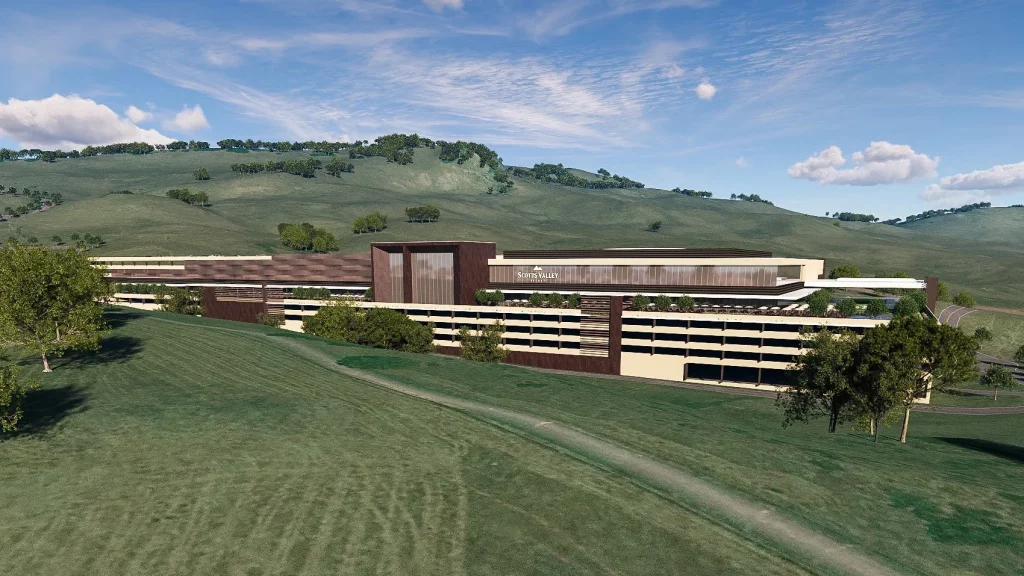
On the other side of the coin, the Scotts Valley Band of Pomo Indians is pushing forward with a proposed $700 million casino and resort project in Vallejo near Interstate 80. And despite its own share of issues — lawsuits, political fights, and federal disputes — the project keeps inching closer and closer to reality.
Last month in April, the Vallejo City Council voted 3-2 to approve a temporary agreement allowing the tribe to move forward with a preview casino and tribal offices while larger legal battles continue playing out. That agreement includes some pretty serious concessions too. The tribe agreed to provide 24-hour on-site security, fund fire mitigation services, install security cameras, contribute toward environmental cleanup efforts, and make sure at least 15 percent of hires come from Vallejo residents.
Still, not everyone is convinced. Some local officials argued the agreement still doesn’t fully protect Vallejo residents or provide enough benefits to the city long-term.
Meanwhile, four opposing tribes are also fighting the project in federal court after the Biden administration approved gaming eligibility for the land in early 2025. Then things got even messier when the Department of the Interior later rescinded that gaming eligibility finding under the Trump administration, saying legal errors may have occurred during the approval process.
A federal judge eventually ruled Scotts Valley’s due process rights were violated during that reversal process, temporarily restoring the eligibility while reconsideration continues. So yes, a cloud of uncertainty still hangs here. But unlike the North Fork project, Scotts Valley are continuing to move dirt, negotiate locally, and build momentum anyway, which are all good signs.
Tribes Also Want Sports Betting Next
The casino expansion push isn’t stopping with physical resorts either. California tribes, dozens of them, are gearing up for another try at legalizing sports betting. Early plans are for a ballot measure in 2028.
Two ballots failed overwhelmingly with voters in 2022 — one that would’ve allowed commercial betting apps (e.g. BetMGM or FanDuel) and another that would’ve kept sports gambling for the tribes only. Both campaigns ended up smearing each other, and just wasted everyone’s time.
Now the tribes appear to be regrouping and trying again with a more unified approach. And most importantly, the commercial apps aren’t going to be muddying the message with their own intentions.
Also going for the tribes is a better pitch this time around. Prediction markets and offshore sportsbooks are all exploding in California despite traditional sports betting remaining illegal. Californians are already finding ways to gamble on sports anyway. Tribes increasingly seem prepared to argue the state might as well regulate it properly and keep the money local. And honestly, that pitch might just work.
You can feel the momentum building for the tribes. If things line up as they appear right now, they could be an even bigger force to be reckoned with by the end of 2028.
 Online betting sites